
VoIP isn't just a technical term; it's a strategic tool revolutionizing how businesses connect with customers and teams. In this guide, we move beyond theory to explore concrete, real-world examples of VoIP in action. We will break down exactly how different industries, from bustling call centers to local healthcare clinics, leverage specific VoIP features to cut costs, boost productivity, and deliver superior customer experiences.
You will see precisely how features like Auto Attendants, call recording, and mobile softphones solve common communication bottlenecks. We'll also unpack practical deployment models like cloud PBX and SIP trunking that fit any business size, from a solo entrepreneur to a multi-location enterprise. This listicle is designed to give you a clear, actionable understanding of how a modern phone system can become a powerful asset for growth.
We will analyze specific platforms like RingCentral and Zoom Phone, complete with screenshots and direct links, to help you visualize the solutions. Forget generic overviews; prepare for a detailed look at how to implement these communication tools effectively. Let's explore how to find the best VoIP setup for your specific operational needs.
1. SnapDial: The All-in-One Hosted VoIP Solution for SMBs
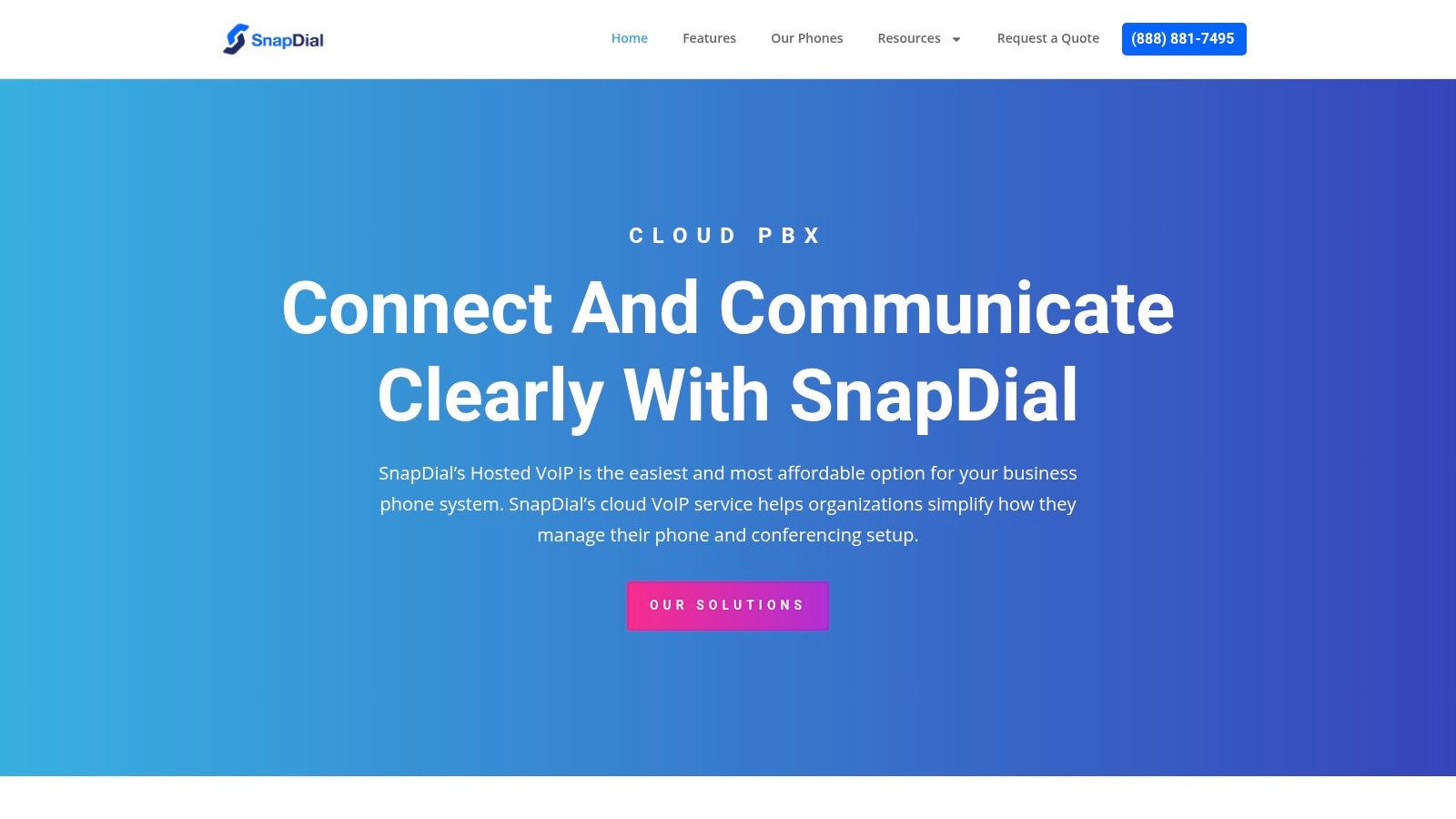
SnapDial stands as a premier example of a fully managed, all-in-one hosted VoIP solution tailored specifically for small to mid-sized businesses (SMBs). It exemplifies the power of cloud PBX systems to replace outdated, on-premise phone hardware with a flexible, feature-rich, and scalable communication platform. This service is engineered for organizations that need enterprise-level functionality without the complexity or cost of managing the underlying infrastructure, making it a compelling choice for businesses without dedicated IT staff.
The core of SnapDial's offering is its commitment to a "white-glove" service model. This approach strategically removes the two biggest barriers for SMBs adopting VoIP: technical migration hurdles and ongoing system management. By handling the entire setup and porting process, SnapDial allows businesses to transition their communications seamlessly, minimizing downtime and ensuring a smooth launch. This hands-on support is a significant differentiator in a market where many providers opt for a self-service model.
Strategic Analysis: Empowering SMBs with Enterprise Tools
SnapDial’s strategy revolves around bundling high-impact features with exceptional support, allowing smaller companies to project a professional image and operate with greater efficiency.
- Professional Call Handling: The multi-level Auto Attendant (IVR) and advanced call queuing features are perfect examples of VoIP capabilities that enable an SMB to manage high call volumes like a much larger enterprise. This prevents missed calls and ensures customers are routed to the correct department quickly.
- Unified Communications for Hybrid Work: With a robust mobile app and a comprehensive web portal, SnapDial directly addresses the needs of modern hybrid and remote teams. Employees can make and receive calls from their business number on any device, manage voicemail transcriptions, and access call logs from anywhere.
- Simplified Hardware Management: By curating and optimizing a portfolio of Yealink phones, SnapDial eliminates the guesswork and compatibility issues often associated with VoIP hardware. This ensures high-definition voice quality and a reliable user experience out of the box.
Key Features and Practical Benefits
| Feature | Practical Benefit for Businesses |
|---|---|
| White-Glove Setup | Removes the technical burden of migration and setup, allowing businesses to focus on their core operations, not IT. |
| 24/7 US-Based Support | Provides peace of mind with live, expert assistance available anytime, ensuring communication systems are always operational. |
| Mobile App & Web Portal | Enables true location independence, keeping teams connected and productive whether at home, in the office, or traveling. |
| Auto Attendant & IVR | Automates call routing, enhances customer experience, and frees up staff from manually directing calls. |
| Call Recording & Analytics | Offers valuable tools for training, quality assurance, and compliance, providing insights into customer interactions. |
Access and Pricing
To get started, businesses must contact SnapDial directly through their website for a custom quote. While this means pricing isn't publicly listed, it allows for a tailored solution based on a company's specific needs, such as the number of users, desired features, and hardware requirements. This consultative sales process ensures a perfect fit for each client.
Website: https://snap-dial.com
2. Zoom Phone
Zoom Phone extends the familiar Zoom ecosystem into a full-fledged cloud phone system, making it a powerful VoIP example for businesses already integrated into the Zoom platform. It consolidates video, chat, and phone calls into a single, unified application, which drastically simplifies the user experience and reduces the need for multiple communication tools.
This integration is its key differentiator. For teams that live in Zoom Meetings, adding a business phone number directly within that same interface is a seamless transition. Users can elevate a phone call to a video meeting with a single click, a feature that enhances collaboration for remote and hybrid teams. The platform provides a native experience across desktop and mobile apps, ensuring consistent functionality regardless of location.
Strategic Breakdown & Key Features
Zoom Phone offers several pricing tiers, making it accessible for businesses of all sizes. The entry-level metered plan starts at $10 per user/month, while the unlimited US/Canada calling plan is competitively priced at $15 per user/month.
| Feature Highlight | Strategic Benefit |
|---|---|
| Unified Communications | Consolidates video, chat, and voice into one app, reducing software clutter and improving workflow efficiency. |
| Simple Onboarding | Teams already using Zoom require minimal training, leading to faster adoption and a quicker return on investment. |
| Advanced AI Features | Optional AI Companion provides call summaries and next-step suggestions, boosting productivity for sales and support teams. |
| Scalable Plans | Offers both metered and unlimited plans, plus add-ons for international calling and hardware, allowing the system to grow with the business. |
Analysis and Actionable Takeaways
Zoom Phone’s primary advantage lies in its ease of use and tight integration with the broader Zoom Workplace. This makes it an ideal choice for small to mid-sized businesses looking for a straightforward, all-in-one communication solution.
Key Insight: The true value of Zoom Phone is its ability to eliminate the friction between different communication modes. By unifying calling with video and chat, it creates a more fluid and efficient collaboration environment.
Pros:
- Excellent for existing Zoom users due to the familiar interface and simple onboarding.
- Strong value with competitive pricing for its unlimited calling plans.
- Rapidly evolving feature set, particularly with its integrated AI tools.
Cons:
- The metered plan can become expensive for teams with moderate to high call volumes.
- Unlimited US/Canada plans may incur extra per-minute charges for calls to certain US territories.
For businesses evaluating VoIP examples, Zoom Phone represents a modern, software-centric approach that prioritizes user experience and platform unity.
Website: https://www.zoom.com/en/lp/phone/voip-calling-2/
3. RingCentral (RingEX)
RingCentral is a well-established leader in the UCaaS (Unified Communications as a Service) space, offering one of the most comprehensive VoIP examples available. It provides an enterprise-grade cloud phone system that combines voice, team messaging, and video into a single platform known as RingEX. This robust solution is built for reliability and scalability, making it a go-to choice for businesses requiring advanced call management and deep analytics.
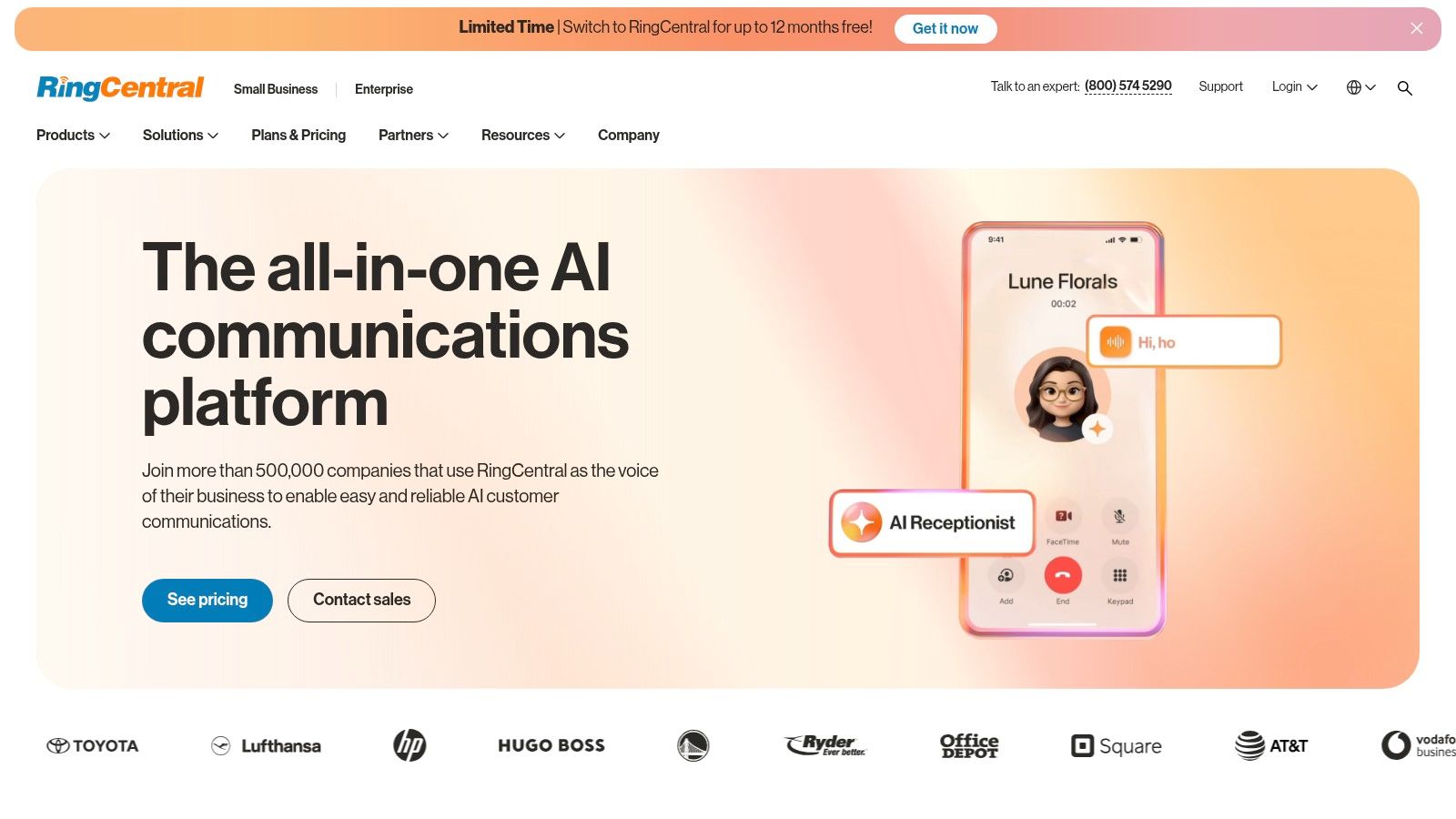
Its key differentiator is the depth of its feature set and its focus on reliability, backed by a 99.999% uptime SLA. For organizations with multiple locations or complex call routing needs, RingCentral offers powerful tools like multi-level auto-attendants and advanced call queues. This makes it an ideal system for businesses that are scaling or have sophisticated communication requirements that entry-level VoIP providers may not support.
Strategic Breakdown & Key Features
RingCentral offers several tiered plans, starting with the Core plan at $20 per user/month (paid annually). Higher tiers like Advanced and Ultra add features such as automatic call recording, advanced reporting, and extensive third-party integrations.
| Feature Highlight | Strategic Benefit |
|---|---|
| Enterprise-Grade Reliability | A 99.999% uptime SLA provides peace of mind for mission-critical business communications, minimizing costly downtime. |
| Advanced Call Management | Features like multi-level IVR, advanced call queues, and whisper/barge capabilities are ideal for managing high-volume call centers and sales teams. |
| Extensive Integrations | A vast app gallery with hundreds of integrations (Salesforce, Microsoft 365, etc.) allows businesses to embed communications into existing workflows. |
| Scalable Multi-Site Support | Centralized management of multiple office locations and remote users simplifies administration for growing, distributed companies. |
Analysis and Actionable Takeaways
RingCentral’s main advantage is its maturity and completeness as a business communication platform. It's a powerful solution for mid-sized to enterprise-level companies that have outgrown basic VoIP services and need a system that can handle complexity without compromising call quality.
Key Insight: RingCentral excels at providing a structured, all-in-one VoIP ecosystem that can replace multiple disparate systems. Its value lies in its ability to unify complex communication needs under a single, reliable, and centrally managed platform.
Pros:
- Mature and highly reliable platform with a strong uptime guarantee.
- Deep feature set with advanced analytics and call handling suitable for growing organizations.
- Excellent for multi-location businesses needing centralized administration.
Cons:
- Pricing is generally higher than many competitors, especially at lower user counts.
- Some users have reported challenges with the billing and contract cancellation process.
For businesses looking for a proven, feature-rich VoIP example that can scale from a small team to a large enterprise, RingCentral remains a top-tier contender.
Website: https://www.ringcentral.com/
4. Nextiva
Nextiva is a prominent VoIP example that bundles calling, SMS, video meetings, and customer routing into a single, cohesive application called NextivaONE. The platform is specifically designed for small to mid-sized businesses (SMBs) seeking a guided transition to a cloud-based phone system, emphasizing responsive support and straightforward onboarding to ensure a smooth implementation.
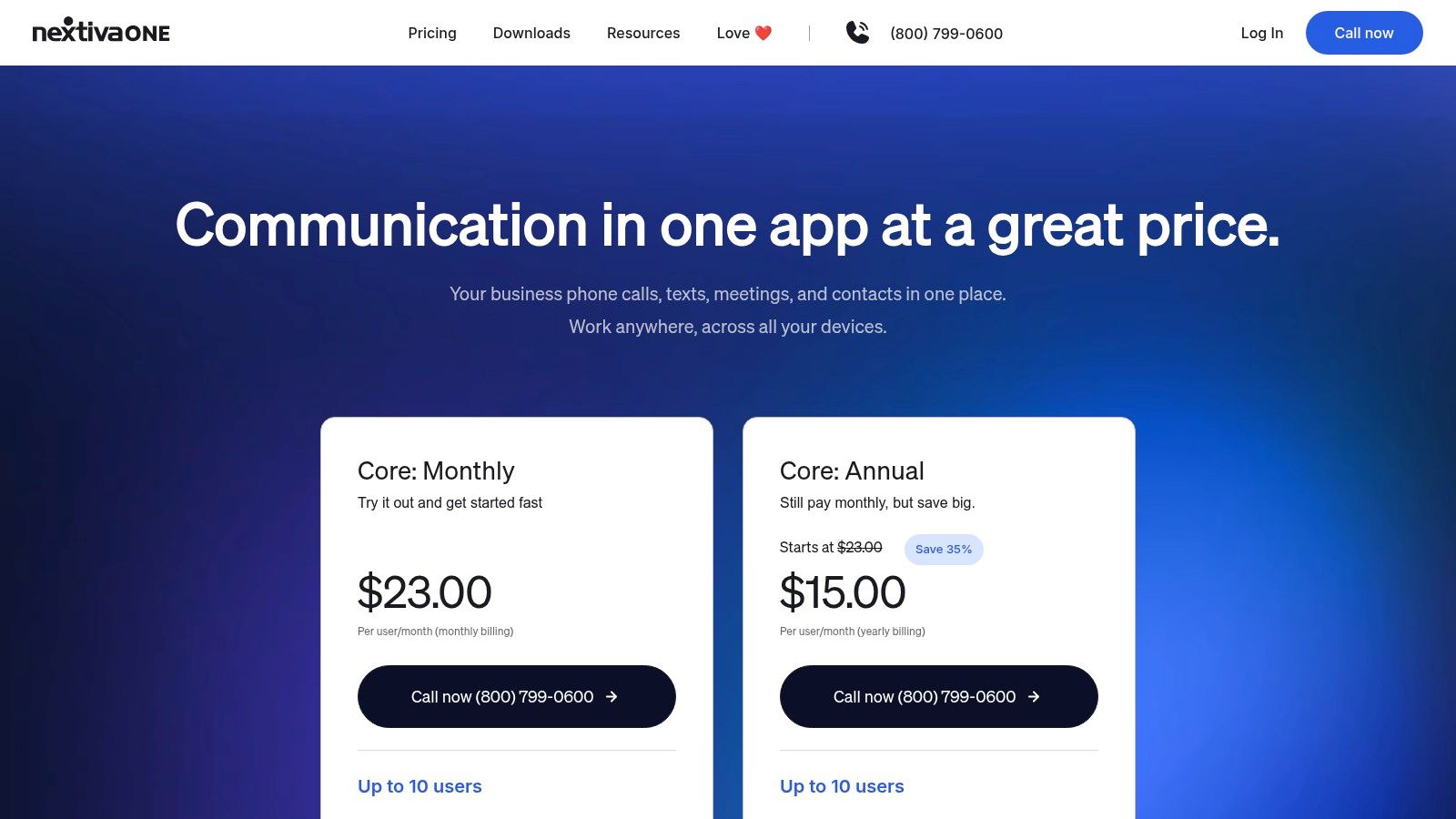
Its core value proposition is simplicity and support. For teams that want an all-in-one experience without complex setup, Nextiva offers a unified app that works seamlessly across desktops and mobile devices. This approach reduces the need for multiple tools and provides a consistent interface for communication, regardless of employee location.
Strategic Breakdown & Key Features
Nextiva’s pricing is structured to be approachable for SMBs, with its entry-level Essential plan starting at $23.95 per user/month with an annual agreement. Prices decrease with more users, and plans scale up to include more advanced CRM and analytics features.
| Feature Highlight | Strategic Benefit |
|---|---|
| Unified NextivaONE App | Consolidates calls, texting, and meetings, which simplifies workflows and enhances productivity for teams. |
| Guided Onboarding | Professional implementation and responsive support reduce the technical burden on SMBs, ensuring a successful deployment. |
| Scalable Tiers | Plans grow from basic calling to include sales and service tools, allowing the platform to adapt as the business expands. |
| Cross-Device Functionality | A consistent experience across desktop and mobile softphones supports remote and hybrid work models effectively. |
Analysis and Actionable Takeaways
Nextiva's strength lies in its user-friendly, all-in-one approach backed by strong customer support. This makes it an excellent choice for businesses that prioritize ease of use and guided setup over deep technical customization. The platform successfully bridges the gap between basic calling and more comprehensive unified communications.
Key Insight: Nextiva’s focus on the entire customer journey, from sales to support, makes it more than just a phone system. It's a foundational tool for businesses aiming to streamline customer interactions and internal collaboration within a single ecosystem.
Pros:
- SMB-friendly with a strong emphasis on responsive implementation and ongoing support.
- Competitive entry-level pricing and a simple, all-in-one application.
- Scalable plans that can incorporate more advanced sales and service features as needed.
Cons:
- Pricing and feature names have evolved; buyers should confirm exact inclusions before purchase.
- Some advanced analytics and call center features may require higher-tier plans.
For organizations looking for a reliable and easy-to-manage VoIP example, Nextiva provides a well-rounded solution that combines robust communication features with exceptional service.
Website: https://nextiva.one/pricing
5. Vonage Business Communications
Vonage Business Communications (VBC) stands out as a flexible and feature-rich VoIP example, particularly well-suited for businesses seeking a comprehensive cloud communication solution with aggressive pricing. It bundles unlimited calling, SMS, and video meetings into a single platform, offering over 50 standard features that cater to a wide range of operational needs, from auto attendants to call recording.
What makes Vonage a compelling option is its direct-to-consumer online model, which frequently features promotions that significantly reduce the cost per line. This approach simplifies the procurement process for small to mid-sized businesses, allowing them to purchase a full-featured phone system, including a local number, directly through the website, often at a discounted rate with a term agreement.
Strategic Breakdown & Key Features
Vonage offers a tiered pricing structure that starts with its Mobile plan at $13.99 per line/month (with annual term and promotional pricing), scaling up to Premium and Advanced plans that add video conferencing and CRM integrations.
| Feature Highlight | Strategic Benefit |
|---|---|
| Comprehensive Feature Set | Over 50 standard unified communications features are included, which eliminates the need for expensive add-ons for essential functions. |
| Aggressive Promotional Pricing | Frequent online deals make it a cost-effective choice for businesses willing to commit to an annual term to lock in lower rates. |
| Unified App Center | An extensive marketplace of integrations allows businesses to connect Vonage with critical tools like Salesforce, HubSpot, and Microsoft Teams. |
| Scalable Tiered Plans | The Mobile, Premium, and Advanced tiers allow a business to pay only for the features it needs, from basic mobile calling to advanced integrations. |
Analysis and Actionable Takeaways
Vonage’s strength lies in its ability to deliver a robust, all-in-one communication package with transparent, often discounted, online pricing. It is an excellent choice for businesses that want a predictable monthly cost and a wide array of features without complex a-la-carte pricing.
Key Insight: Vonage's strategy centers on making enterprise-grade unified communications accessible and affordable. By bundling features and offering promotional rates, it lowers the barrier to entry for businesses transitioning from traditional phone systems.
Pros:
- Highly competitive pricing, especially through online promotions for new customers.
- Straightforward online purchase process that includes a business phone number.
- Extensive list of standard features provides significant value even in base plans.
Cons:
- The lowest advertised prices typically require a 12-month contract with early termination fees.
- Advanced AI and analytics features may not be as mature as those from more specialized competitors.
For businesses looking for reliable VoIP examples, Vonage represents a strong balance of features, scalability, and cost-effectiveness, making it a go-to for many SMBs.
Website: https://www.vonage.com/unified-communications/pricing-xaa/
6. VoIP Supply
While many VoIP examples focus on software and cloud services, the hardware that powers these systems is a critical component. VoIP Supply stands out as a leading North American e-commerce platform dedicated exclusively to VoIP hardware, making it an essential resource for businesses building or upgrading their phone systems. It serves as a one-stop shop for everything from IP desk phones and headsets to complex PBX hardware and gateways.
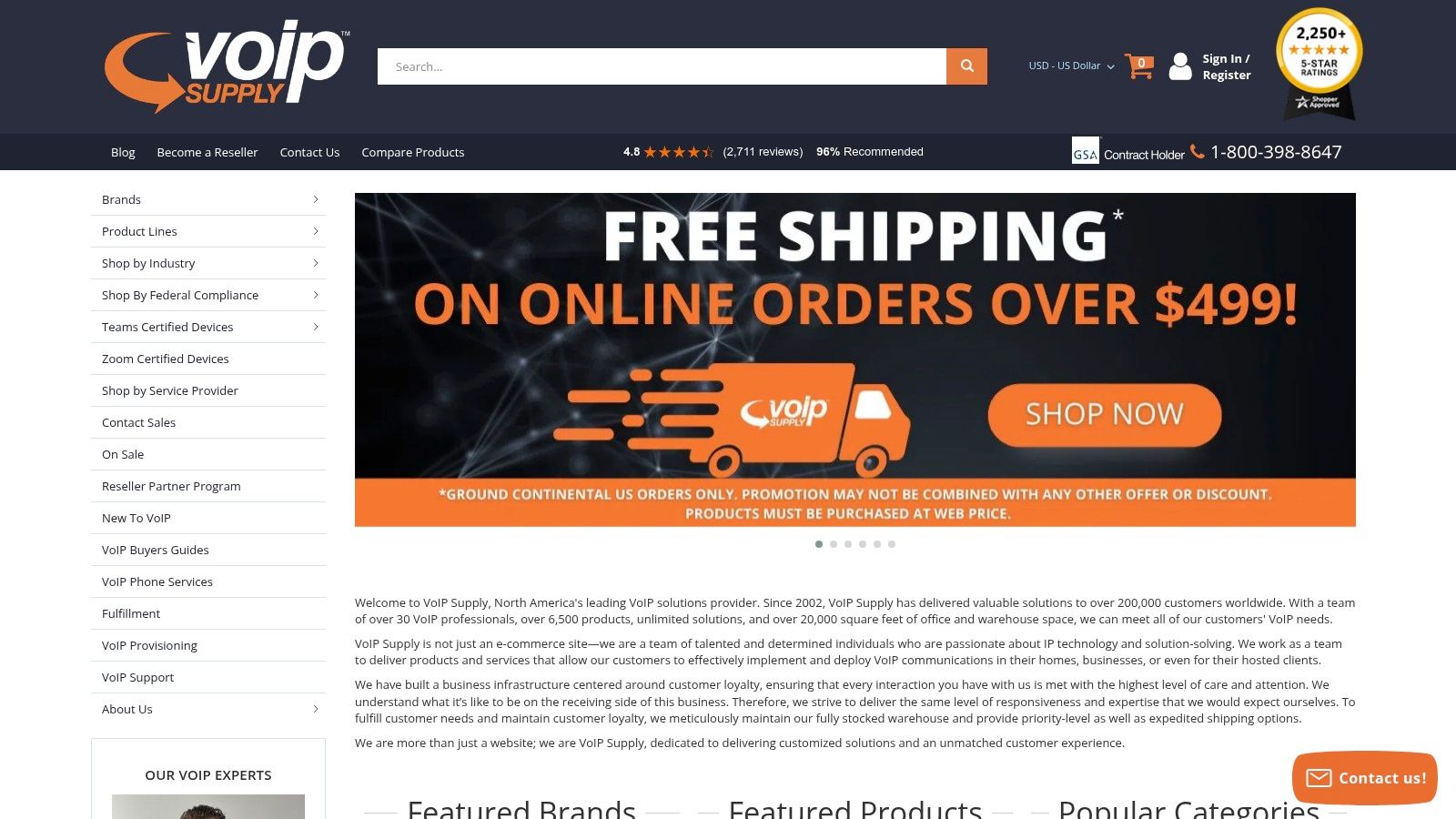
The platform’s key differentiator is its specialized focus. Unlike general electronics retailers, VoIP Supply provides expert support and a curated inventory from top brands like Poly, Yealink, Cisco, and Grandstream. This specialization ensures that businesses can find compatible, high-quality equipment and get knowledgeable advice, simplifying the often-complex process of hardware procurement for a VoIP deployment.
Strategic Breakdown & Key Features
VoIP Supply offers competitive market pricing on new equipment and provides significant cost savings through its "Refresh" program for certified refurbished hardware. All products ship from a US-based warehouse, ensuring fast and reliable delivery.
| Feature Highlight | Strategic Benefit |
|---|---|
| Specialized VoIP Inventory | Access a comprehensive catalog of over 6,500 VoIP-specific products, ensuring compatibility and one-stop procurement. |
| Refurbished 'Refresh' Program | Reduces hardware costs significantly, allowing smaller businesses to afford enterprise-grade equipment while stretching their IT budget. |
| Expert Pre-Sales Support | Knowledgeable US-based staff help businesses select the right hardware, preventing costly compatibility mistakes and returns. |
| Fast, US-Based Shipping | Enables rapid deployment and replacement of hardware, minimizing downtime for critical business communication systems. |
Analysis and Actionable Takeaways
VoIP Supply’s primary advantage is its role as a dedicated hardware partner for businesses of any size. By centralizing the purchasing process and offering expert guidance, it removes a major hurdle in adopting or scaling a VoIP system. Their "Refresh" program is a particularly powerful tool for budget-conscious organizations.
Key Insight: The success of any VoIP system depends on reliable hardware. VoIP Supply de-risks the hardware selection process, transforming it from a potential bottleneck into a straightforward step in your communication strategy.
Pros:
- Deep, VoIP-specific inventory from all major brands ensures you can find the right device.
- Refurbished options provide a cost-effective way to acquire high-quality equipment.
- Expert customer support helps navigate complex compatibility and feature requirements.
Cons:
- As a specialty retailer, prices on some commodity items may be higher than on large, general marketplaces.
- Stock availability for specific, high-demand models can vary and should be confirmed.
For businesses looking at physical examples of VoIP hardware, VoIP Supply is the go-to destination, providing the tangible equipment needed to bring a cloud communication strategy to life.
Website: https://www.voipsupply.com/
7. B&H Photo Video – VoIP Phones
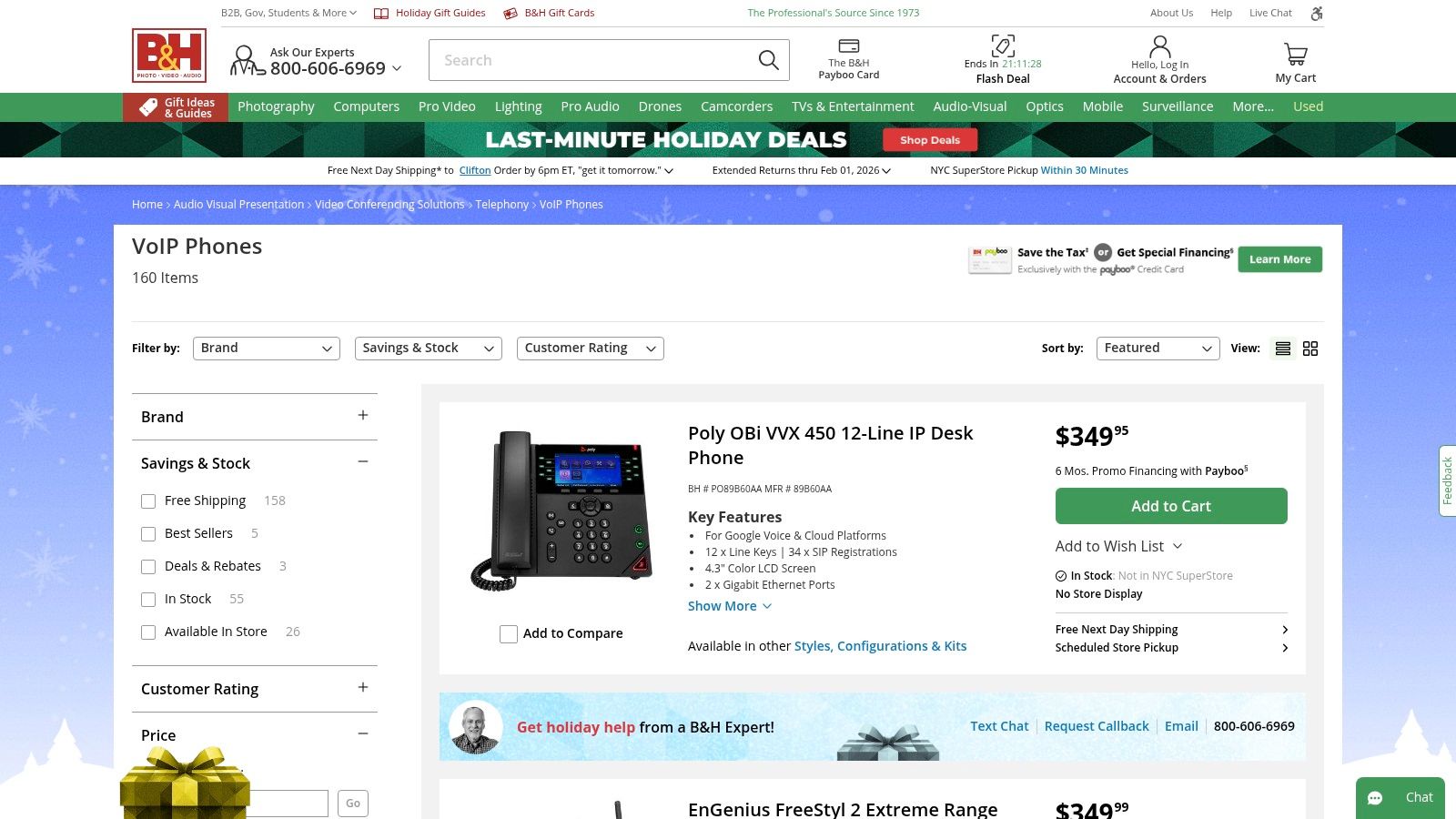
While not a VoIP service provider, B&H Photo Video serves as a crucial hardware marketplace in the VoIP ecosystem. As a major US retailer, it provides businesses a reliable, one-stop shop for purchasing physical SIP/VoIP desk phones, conference phones, and essential accessories from leading brands like Yealink, Poly, Cisco, and Grandstream. This makes it a key example of the hardware component required for many VoIP deployments.
For businesses that prefer physical desk phones over softphones, B&H simplifies the procurement process. It offers detailed product specifications, clear warranty information, and multiple fulfillment options, including fast and often free shipping. This accessibility allows IT managers and administrators to quickly acquire the specific hardware needed to roll out or upgrade their phone systems without being locked into a single provider's hardware lease or purchase program.
Strategic Breakdown & Key Features
B&H’s value is in its role as a trusted third-party hardware vendor. Pricing is market-competitive and transparent, with new, used, and promotional options available. For example, a popular Yealink SIP desk phone might be listed at $80-$150, depending on the model and current promotions.
| Feature Highlight | Strategic Benefit |
|---|---|
| Curated Brand Selection | Provides access to top-tier, unlocked SIP phones, giving businesses freedom to choose hardware compatible with their VoIP service. |
| Detailed Product Pages | In-depth specs, user reviews, and Q&As help IT managers verify compatibility and make informed purchasing decisions. |
| Fast, Reliable Shipping | Free Standard or 2-Day shipping on many items ensures quick deployment of new phones, minimizing downtime during an office move or expansion. |
| Trustworthy Retailer | A long-standing reputation for customer service and straightforward returns reduces the risk associated with purchasing critical business hardware. |
Analysis and Actionable Takeaways
B&H Photo Video is the ideal destination for businesses that have already chosen a SIP-based VoIP service and need to purchase unlocked hardware. Its strength lies in providing a dependable and efficient procurement channel, separate from the service provider itself, which gives companies greater flexibility and control over their assets.
Key Insight: Decoupling hardware purchases from the VoIP service subscription can lead to long-term cost savings and prevent vendor lock-in. B&H facilitates this strategy by offering a competitive, open market for essential equipment.
Pros:
- Reputable US retailer with excellent customer support and clear return policies.
- Fast and often free shipping on popular, in-stock VoIP phones.
- Easy-to-use website with powerful filters to find specific models or certified devices (e.g., Teams-certified).
Cons:
- Inventory is not as extensive as a specialized VoIP-only distributor; some niche models may be special-order.
- Pricing and availability can fluctuate based on supply and promotional periods.
For organizations building out their physical office infrastructure, B&H is an excellent example of a streamlined resource for acquiring the tangible components of a modern VoIP system.
Website: https://www.bhphotovideo.com/c/buy/VoIP-Phones/ci/13094/pn/5
Top 7 VoIP Providers: Quick Comparison
| Product | 🔄 Implementation complexity | ⚡ Resource requirements | 📊 Expected outcomes | 💡 Ideal use cases | ⭐ Key advantages |
|---|---|---|---|---|---|
| SnapDial | Low — white‑glove, zero‑downtime migration and managed onboarding | Moderate — cloud service + reliable internet; curated Yealink phones available | High — enterprise call‑center features and uninterrupted transition | SMBs or multi‑site orgs wanting managed, US‑based support and contact‑center features | All‑inclusive pricing model, 24/7 Texas support, advanced queueing & reporting |
| Zoom Phone | Low — simple if already on Zoom; single admin plane with Meetings/Chat | Low‑Moderate — apps or desk phones; optional global/add‑on services | Good — integrated calling + meetings; evolving AI features | Teams already using Zoom or needing unified meetings + telephony | Clear online pricing, tight Zoom integration, competitive entry tiers |
| RingCentral (RingEX) | Moderate — robust configuration for routing, analytics, multi‑site | Moderate‑High — admin resources for integrations and scale | Very high — enterprise reliability, deep analytics and uptime | Growing organizations requiring enterprise UCaaS and multi‑site management | Mature platform, strong integrations, comprehensive analytics |
| Nextiva | Low — SMB‑focused onboarding and guided implementation | Low — unified app across devices; minimal IT overhead | Solid — unified calling, texting and meetings in one app | SMBs wanting a single app experience with responsive onboarding | Competitive entry pricing, responsive implementation support |
| Vonage Business Communications | Low‑Moderate — easy online setup but contract terms may apply | Low — cloud service; devices supported; best rates often require a term | Moderate — broad feature set with frequent promotions but tier limits | Price‑sensitive buyers comfortable with 12‑month terms to get promos | Aggressive promotional pricing, simple online purchase, many features |
| VoIP Supply | Variable — hardware procurement only; integration required by buyer | High — purchasing/managing phones, gateways, on‑prem gear and logistics | Variable — access to wide hardware choices; faster fulfillment for US buyers | IT teams sourcing phones, gateways, on‑prem PBX hardware or refurb options | Extensive VoIP‑specific catalog, refurbished options, US warehouse shipping |
| B&H Photo Video – VoIP Phones | Low — retail purchase of devices; minimal vendor setup | Moderate — device procurement with standard shipping and warranties | Reliable — fast fulfillment and clear product specs/warranty info | Small teams needing in‑stock phones quickly or standard models | Reputable retailer, fast shipping, detailed spec pages and returns |
Choosing the Right VoIP Path for Your Business
Throughout this guide, we've explored a diverse landscape of VoIP solutions, moving from abstract concepts to tangible, real-world applications. The examples of VoIP we've dissected, from the all-in-one unified communications of RingCentral to the familiar integration of Zoom Phone, illustrate a crucial point: Voice over IP is not a monolithic technology. It's a flexible, powerful framework that businesses can mold to fit their precise operational needs, strategic goals, and customer service philosophies.
We saw how a healthcare clinic might leverage HIPAA-compliant features and call recording for training and liability protection, while a multi-location retail chain uses a cloud PBX and mobile softphones to create a seamless, unified brand presence for customers, regardless of which store they call. These aren't just features; they are strategic business decisions enabled by modern communication technology. The key takeaway is to view your transition to VoIP not as a simple phone system upgrade, but as a strategic overhaul of your communication infrastructure.
From Examples to Action: Your Implementation Checklist
The journey from understanding VoIP examples to implementing your own system requires careful planning. Before you make a decision, your team should conduct a thorough internal audit guided by the insights from the providers and use cases we’ve covered.
Use this checklist to create a clear roadmap:
- Audit Your Current Infrastructure: Is your network ready for VoIP? Assess your internet bandwidth, routers, and switches. A reliable connection is the foundation of clear, high-quality calls.
- Define Your Non-Negotiables: Based on the examples of VoIP in your industry, what features are absolutely essential? Is it an advanced auto-attendant, deep CRM integration, or robust call analytics? List your top three to five "must-have" functionalities.
- Map Your Communication Workflows: How do calls flow into and through your organization? Consider your main business line, departmental queues, and individual extensions. A clear workflow map helps you configure systems like IVRs and ring groups effectively.
- Consider Scalability and Future Growth: Where do you see your business in five years? Choose a provider that can grow with you, whether that means adding new users, new locations, or more advanced features without requiring a complete system replacement.
Making the Final Decision
Choosing the right partner is just as important as choosing the right technology. As demonstrated by a provider like SnapDial, the value often lies in the service, support, and strategic guidance offered alongside the software. Look for a provider that acts as a partner, one who takes the time to understand your business goals and helps you configure a system that actively works to achieve them. The best examples of VoIP implementation occur when technology is perfectly aligned with a company's vision for customer engagement and operational efficiency. By learning from these diverse models and applying a strategic mindset to your own needs, you can transform your business communications from a simple utility into a powerful competitive advantage.
Ready to see how a fully managed, white-glove VoIP service can transform your business communications? SnapDial offers a perfect real-world example of VoIP tailored to your specific needs, with expert US-based support guiding you every step of the way. Explore SnapDial today to build your ideal communication system.