
When your phone rings, it’s more than just a sound—it’s a customer reaching out. Simply put, an inbound call is any call that comes into your business from a customer or potential lead.
Unlike outbound calls where your team does the dialing, these calls mean someone is actively seeking you out. They’re responding to your marketing, acting on your brand’s reputation, or have an urgent need for help.
Understanding the Power of Inbound Calls
Think of an inbound call as a customer knocking on your door. They’ve already found their way to you and are ready to talk. Each ring is a live opportunity—someone is engaged enough to pick up the phone and connect with you directly.
For many businesses, these calls are the heart of customer service and a major driver of sales. While outbound efforts are about creating new interest through things like cold calling or follow-ups, inbound calls are purely reactive. They stem from a customer’s own motivation, which makes them incredibly valuable conversations. Getting this right isn’t just a nice-to-have; it’s essential for any business that wants to grow.
Inbound vs Outbound Calls at a Glance
To really get a feel for what makes inbound calls unique, it helps to compare them directly with their outbound counterparts. The main difference always comes down to who starts the conversation and why.
Here’s a quick breakdown to make the distinction crystal clear.
| Aspect | Inbound Calls | Outbound Calls |
|---|---|---|
| Initiator | The customer or prospect calls your business. | Your business calls the customer or prospect. |
| Purpose | To get help, ask questions, or buy something. | To sell, run a survey, or follow up on a lead. |
| Customer Intent | High — they have a specific need right now. | Low — the call is often unexpected. |
| Primary Goal | Solve problems, build trust, and close sales. | Create leads, collect information, and drive new sales. |
The distinction is simple yet profound: Inbound calls pull customers toward you, driven by their existing needs and interest. Outbound calls push your message out to a broader audience, hoping to create that interest.
At the end of the day, every inbound call is a key moment in that person’s journey with your company. It’s your chance to solve a problem, deliver a fantastic experience, and build a loyal customer. A great inbound system makes sure you’re always ready to answer when opportunity calls, turning a simple phone conversation into a real, lasting business relationship.
How an Inbound Call Travels to Your Team
Ever stopped to think about what actually happens when a customer dials your number? That journey, from their phone to your team member’s ear, is a lightning-fast sequence of events that modern tech makes feel totally seamless. While the underlying technology is pretty complex, the path a call takes is actually quite easy to follow.
Think of the global phone network as a massive, super-efficient postal service. When a customer dials your business number, they’re essentially putting a specific address on a package. That package—the call itself—has to get to the right person on your team, quickly and reliably, no matter where they are.
The Digital Sorting Facility
This is where a cloud-based phone system, like a cloud PBX, steps in. It acts as the central sorting facility for all your calls. As soon as a call hits the network, it’s instantly whisked away to this digital hub. Forget old-school copper wires or a clunky switchboard in a back closet; this all happens over the internet.
The system immediately recognizes the number that was dialed and knows it belongs to your business. But its job isn’t just to connect the call—it’s to connect it intelligently. This is the first critical step that turns a simple phone line into a powerful business asset.
This chart shows the fundamental difference in how inbound and outbound calls flow.
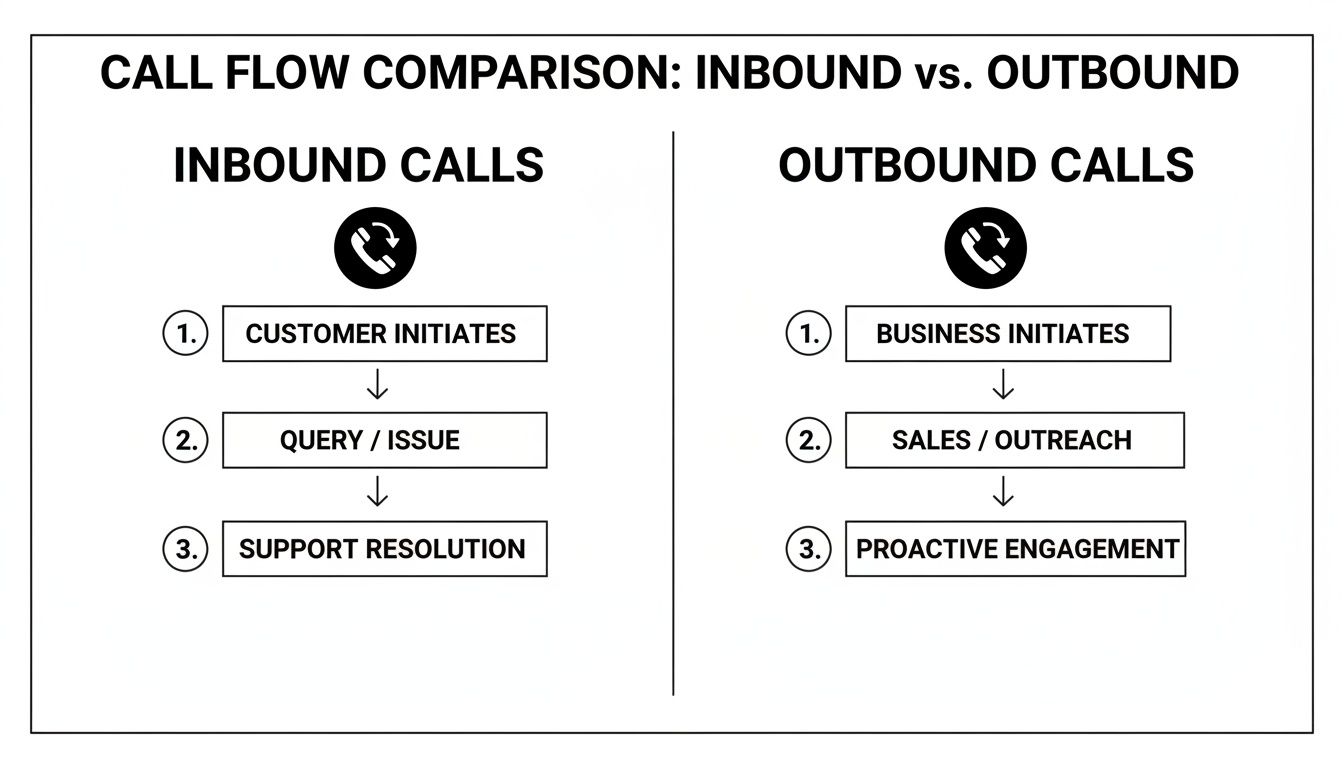
The main thing to remember is that inbound calls are reactive—they’re all about responding to what a customer needs. Outbound calls are proactive, with your team making the first move.
Intelligent Routing to the Right Person
Once the cloud PBX grabs the call, it immediately checks the rulebook you’ve set up. This is where the real magic of call routing begins. It’s basically a series of if/then instructions that guide the call to its final destination.
This process can play out in a few different ways:
- Auto Attendant (IVR): The first stop might be a virtual receptionist (“Press 1 for Sales, Press 2 for Support”). This lets callers sort themselves into the right department from the get-go.
- Time-of-Day Routing: Calling after hours? The system knows to automatically forward the call to a voicemail or maybe to an on-call team member’s cell phone.
- Skills-Based Routing: In more sophisticated contact centers, the system can figure out what the caller needs and send them to the agent best equipped to handle that specific issue.
This entire decision-making process happens in the blink of an eye. The customer just hears a ring or a friendly greeting, completely unaware of the complex technology working behind the scenes to make sure they aren’t dropped or sent down a rabbit hole. That seamless experience is the hallmark of a professional inbound call system.
The Essential Toolkit for Modern Inbound Call Systems

A modern phone system isn’t just about making and taking calls anymore. It’s the central nervous system for your customer communications, a complete toolkit that makes sure every single inbound call is handled efficiently and professionally. These features turn what used to be a simple phone line into one of your most powerful tools for business growth.
We’re seeing a huge shift in how businesses and customers connect. A recent study found that 61% of contact center leaders have seen a sustained increase in call volumes, a clear sign that customers still value direct conversation. As inbound support becomes the primary way customers reach out, having the right tools isn’t just a nice-to-have; it’s essential. You can see more data on these trends in this call center statistics overview.
All of these tools run on the backbone of a cloud-based phone system. This technology gives you the flexibility to add and manage these features without needing a server room full of hardware. If you’re curious about the engine behind it all, take a look at our guide on what is a cloud phone system.
Your 24/7 Virtual Receptionist
The first thing your callers will interact with is the Auto Attendant, which you might also know as an IVR (Interactive Voice Response) system. Just think of it as the perfect virtual receptionist—it works around the clock, never has a bad day, and greets every caller with a perfectly professional message.
The auto attendant gives callers a simple menu of options, like “Press 1 for Sales, Press 2 for Support.” This empowers them to direct themselves right where they need to go, instantly. It’s a win-win: customers get faster service, and your team is freed from the mundane task of manually transferring calls, so they can focus on solving real problems.
Intelligent Call Routing and Queues
When things get busy, a customer hearing a busy signal is a recipe for disaster. That’s where call queues come in. Instead of turning the caller away, the system places them in a virtual line, often with some pleasant hold music or an update on their estimated wait time.
Working alongside queues is intelligent call routing. This is more than just sending a call to the next person who isn’t busy. Modern systems can use smart logic to find the best possible person for the job.
- Skills-Based Routing: Got a caller with a tricky technical question? This routes them directly to your tech guru.
- Round-Robin Routing: Spreads the call load evenly across the team, which helps prevent anyone from getting overwhelmed.
- Time-Based Routing: Automatically sends calls that come in after hours to voicemail or an on-call team member’s mobile phone.
By directing the flow of calls this way, you cut down on customer frustration, solve more issues on the first try, and create a much more balanced and efficient workload for your team.
Essential Tools for Quality and Flexibility
Beyond getting the call to the right person, a complete inbound toolkit needs features for quality control and on-the-go work. Call recording is a game-changer for training new staff, ensuring you meet compliance standards, and getting to the bottom of any customer disputes. It’s an objective record of exactly what was said.
Meanwhile, visual voicemail saves a ton of time by transcribing voice messages into text. Your team can quickly scan their messages and prioritize callbacks without having to listen to every single one.
And finally, mobile apps bring your entire office phone system right to your team’s smartphones. This means they can manage inbound calls with the same professional tools whether they’re at their desk or on the road. It’s like having a pocket-sized office, ensuring you’re always responsive.
Unlocking the Strategic Benefits of Optimized Inbound Calls
A well-oiled inbound call system is so much more than a way to answer the phone; it’s a genuine engine for business growth. When you get smart about how your calls are handled, the ripple effects touch everything from customer relationships to your team’s workflow and, of course, your bottom line.
The most immediate win is a huge boost in customer satisfaction. We’ve all been there—stuck on hold forever or bounced between departments. It’s frustrating. A smooth, intelligent system cuts that friction out, getting callers to the right person on the first try. That simple act of respecting a customer’s time builds incredible loyalty.
Enhancing Operational Efficiency
Automating your call flow is a game-changer for your team’s productivity. Imagine using an Auto Attendant to handle initial routing and call queues to manage high volume. Suddenly, your people are freed up to focus on what they were hired for: solving tricky problems and building real connections with customers.
This isn’t about replacing people; it’s about empowering them. Your team spends less time on mundane, repetitive tasks and more time on high-impact conversations. They can handle a greater volume of calls without burning out, which leads to a more effective and happier workforce.
For many businesses, that incoming call is the first real point of contact. A great system ensures every one of those interactions is smooth, professional, and helpful—setting the tone for your entire brand.
And make no mistake, the phone is more important than ever. In 2023, inbound voice calls accounted for a massive 55.4% of all customer contacts, a figure that’s actually on the rise. As you can see in these contact center benchmarks and trends, customers are increasingly turning to the phone for direct, human conversations they can trust.
Protecting Your Bottom Line
Here’s the bottom line: every inbound call is either a potential sale or a chance to keep a customer you worked hard to win. A missed call or a constant busy signal isn’t just an inconvenience—it’s lost money, plain and simple. A reliable cloud phone system acts as a safety net, ensuring every lead and every customer has a clear path to your team.
This level of reliability is non-negotiable for any business that depends on phone inquiries. When you make it a priority to capture every single incoming opportunity, your phone system stops being a simple utility and starts acting like a consistent revenue-generating machine.
For companies ready to truly maximize every customer touchpoint, digging into dedicated VoIP call center solutions can unlock the advanced tools needed to secure that growth.
Measuring and Improving Your Inbound Call Performance

You can’t improve what you don’t measure. That old saying is especially true for your phone system. A professional inbound call setup does more than just answer calls; it gives you the hard data you need to see what’s working and what’s falling flat. By tracking the right Key Performance Indicators (KPIs), you can turn your phone lines from a simple utility into a powerful tool for growth.
Think of it like the dashboard in your car. Just as you monitor your speed and fuel level, call metrics tell a story about your customer experience and team efficiency. The data reveals everything from your busiest call times to individual agent performance and hidden friction points that might be costing you customers. This is how you stop guessing and start making informed decisions.
Key Metrics Every Business Should Track
Getting a handle on your inbound call performance starts with a few core metrics. These KPIs give you a quick, clear snapshot of your system’s health, helping you make smarter choices about everything from staffing levels to employee training.
- First Call Resolution (FCR): What percentage of callers get their issue solved on the very first try, with no need for a follow-up? A high FCR is one of the best signs of happy customers and a well-trained team.
- Average Handle Time (AHT): This tracks the entire customer interaction, from “hello” to the end of any post-call admin work. While a lower AHT can point to efficiency, you have to balance it with FCR. Rushing a customer off the phone without solving their problem isn’t a win.
- Call Abandonment Rate: How many people hang up before they even get to speak to a person? This is a critical one. A high abandonment rate is a huge red flag, often pointing to frustratingly long wait times or a confusing IVR menu.
Each of these numbers tells you something different. But when you look at them together, they paint a complete picture of your customer’s journey, showing you where you’re excelling and where opportunities are slipping through your fingers.
Turning Insights Into Action
Once you have the data, you have to actually use it. Analytics aren’t just for dusty old reports; they’re your playbook for making real improvements to how your business handles calls.
For example, what if your Call Abandonment Rate spikes every single day around noon? That’s not a coincidence. The data is practically screaming that you’re understaffed during the lunch rush. That simple insight lets you adjust schedules for better coverage and immediately stop missing calls. Modern systems provide incredible detail, and you can learn more about these features in our guide to powerful call analytics.
Best Practices for Better Performance
Here are a few practical strategies you can use to improve your inbound call handling right away, based on what the data tells you:
- Optimize Your IVR Menu: Keep your auto-attendant options simple, clear, and logical. If your analytics show a ton of callers just pressing “0” to get to an operator, it’s a good sign your menu is too complicated or doesn’t have what they need.
- Manage Queue Overflows: Don’t just let callers wait forever. Set up rules to automatically reroute calls if the queue time hits a certain limit. Even better, offer a callback option—it dramatically reduces hang-ups and keeps customers happy.
- Use Call Recordings for Training: Call recordings are a goldmine for coaching. Listen to them with your team to pinpoint areas for improvement and, just as importantly, to celebrate great examples of customer service.
By actively keeping an eye on your KPIs and putting these practices into place, you create a cycle of constant improvement. Your customer service gets better, and you make sure every valuable call gets the attention it deserves.
How to Transform Your Inbound Call Experience
Knowing what makes a great inbound call system is one thing. Actually piecing it all together into a reliable, seamless experience for your customers? That’s a whole different ballgame. This is where a dedicated solution like SnapDial stops being just a list of features and becomes a central part of your business strategy, built to solve the real-world headaches of managing customer calls.
The whole point is to create an experience where every single inbound call is handled professionally, no matter how big your team is or where they’re working from. It all starts with getting rid of that nagging fear of downtime. A white-glove setup means the entire transition is managed for you, from start to finish. You can get a massive upgrade in capability without the risk of missing even one customer call. We handle porting your existing numbers and mapping out your entire call flow, ensuring you hit the ground running.
A Partnership Built on Reliability
Once you’re up and running, that peace of mind doesn’t go away. Knowing an expert is always on standby takes the stress out of managing a system that feels complex. With SnapDial, you get 24/7 Texas-based support—real people you can talk to on the phone or online who can solve problems fast. For any business where every call is a potential opportunity, that kind of commitment is everything.
That reliability should extend to your budget, too. A predictable pricing model means you get all the powerful tools—from the Auto Attendant and call queues to deep analytics—without getting nickel-and-dimed by hidden fees or surprise charges. This kind of transparency lets you focus on your customers, not on deciphering your phone bill.
An effective inbound system is more than just technology; it’s a promise to your customers. It says you are accessible, professional, and ready to help the moment they decide to reach out.
Unifying Your Team, Wherever They Are
Finally, any modern phone system has to support today’s flexible workstyles. SnapDial is designed to bring remote and multi-location teams together, making them feel like a single, cohesive unit. An employee working from home in another state can answer a call routed from your main office with the exact same professionalism as someone sitting at the front desk.
This unified approach is what drives consistency and efficiency. By pulling together all the tools we’ve talked about—from smart routing to mobile apps—you can ensure every inbound call is treated with the care and urgency it deserves. You’re not just answering the phone; you’re turning every ring into a real opportunity to build a stronger customer relationship and grow your business.
Frequently Asked Questions
What’s the Real Difference Between an Inbound and Outbound Call Center?
It all comes down to the direction of the conversation. Think of an inbound call center as the welcome desk; it’s set up specifically to receive calls from customers who need help, want to buy something, or have questions.
An outbound call center, on the other hand, is the one initiating the contact. Its agents are making the calls for things like sales prospecting, market research, or appointment reminders. Of course, many modern setups are blended, handling both incoming and outgoing calls seamlessly.
How Can a Cloud Phone System Actually Help My Small Business?
A cloud phone system basically gives a small business the communications firepower that, just a few years ago, was only accessible to huge corporations with massive budgets.
You get powerful tools like a virtual receptionist to greet and direct callers, call queues to manage busy periods without losing customers, and mobile apps that let your team answer business calls from anywhere. It’s all about looking professional and making sure you never miss that next big opportunity.
Is It a Headache to Switch to a Cloud-Based Phone System?
Not at all, provided you choose the right partner. The transition can be surprisingly smooth. Look for a provider that offers a “white-glove” setup. This means they handle everything for you—porting your existing numbers, configuring all the features, and getting your team up and running with zero disruption to your business.
Ready to transform your customer communications without the hassle? SnapDial offers a complete cloud phone system with white-glove setup and 24/7 support, ensuring you capture every opportunity. Learn more about SnapDial’s business phone solutions.