
For any Dallas business that’s serious about growth, clear and reliable communication is the bedrock of everything you do. The best business phone systems in Dallas have moved far beyond the clunky, on-premise hardware of the past. Today, it’s all about modern, cloud-based VoIP solutions that give you flexibility, powerful features, and the local support you need to keep your teams connected, no matter where they are.
Why Dallas Businesses Are Moving to the Cloud
In a city that’s expanding as fast as Dallas, using yesterday’s tools is a surefire way to fall behind. A legacy phone system, with all its on-site server racks and rigid rules, is like trying to stream a 4K movie on a dial-up modem. It’s clunky, unreliable, and just can’t keep up with the demands of a modern business.

Making the switch to a cloud phone system is like upgrading your whole operation to high-speed fiber. It’s a massive jump in performance, agility, and what your team can accomplish. If you want a closer look at the tech behind it, check out our guide on https://snap-dial.com/what-is-a-cloud-phone-system/.
The Driving Forces Behind the Switch
This shift isn't just some passing trend; it's a smart, strategic reaction to how business in Dallas gets done now. With hybrid and remote work becoming the norm across the DFW metroplex, being tied to a physical office is no longer a viable option.
Upgrading your communications is no longer just an IT project; it's a core business investment in operational agility and delivering a superior customer experience. Modern systems create a true 'office anywhere' environment, empowering your team to be productive from any location.
You can see this modernization wave happening all over the local business community. The adoption of managed IT services among small and mid-sized firms in the DFW area is projected to leap from just 38% in 2023 to over 61% by late 2025. It's part of a huge tech upgrade cycle that absolutely includes business phone systems—a market set to grow from $26.6 billion in 2026 to $57 billion by 2035 worldwide.
From Cost Center to Competitive Edge
At the end of the day, moving to the cloud turns your phone system from a static line item on a budget into a dynamic tool that gives you a real competitive edge. As more Dallas businesses explore this path, understanding the ins and outs of choosing a cloud provider becomes critical. A modern platform delivers what you really need:
- Scalability: Add or remove users in minutes as your team grows or changes, without ever needing to call a technician.
- Business Continuity: Keep your business online and your phones ringing, even during office closures, power outages, or other local disruptions.
- Enhanced Productivity: Arm your team with tools they'll actually use, like mobile apps that work anywhere, video conferencing, and integrated team messaging.
When you start digging into modern phone systems, you’ll see terms like “Hosted VoIP” and “Cloud PBX” thrown around. It’s easy to assume they’re just more technical jargon, but the concept is actually pretty simple. Both terms mean the same thing: the complex, bulky hardware that runs your phone system is no longer your problem. It’s managed by your provider in their secure data centers, not stuffed in your office's IT closet.
Think of it like this: you wouldn't maintain a massive, expensive DVD collection anymore when you can just have a Netflix subscription. You get all the features you could ever want without owning, storing, or fixing any of the clunky hardware. That’s the exact shift that the smartest business phone systems Dallas companies are making.
This isn't a small trend—it’s a complete transformation of business communications. The global market for these systems was already worth around $44.26 billion in 2025 and is set to grow by 10.9% every year through 2034. That explosive growth is almost entirely driven by cloud solutions, which can slash costs by up to 50% by eliminating hardware maintenance. You can see the full market breakdown at Data Insights Market.
What This Means for Your Dallas Business
So, what does this actually do for a business in the competitive Dallas-Fort Worth market? Moving to the cloud delivers immediate, practical advantages. It’s not just about getting new phones; it’s about making your company more agile, efficient, and financially sound.
Instead of sinking a huge chunk of capital into an on-premise PBX you have to maintain, you switch to a predictable, affordable monthly subscription. That means no more surprise repair bills and no need to pay a specialist to manage a phone server.
A cloud phone system completely changes how you think about risk. It decentralizes your communications, which means your business can keep running smoothly even if your physical office is inaccessible because of a storm, a power outage, or any other local disruption.
The Power of a Virtualized System
The real game-changer here is flexibility. Because the system lives in the cloud, it isn't tied to a physical building. Here's what that unlocks for your team:
- Geographic Freedom: An employee working from their home in Frisco gets the exact same features and professional presence as someone sitting in your downtown Dallas office.
- Device Flexibility: Your team can make and receive calls on a desk phone, a laptop softphone, or a mobile app—all while showing your main business number.
- Simplified Management: Need to add a new employee, tweak how calls are routed, or check voicemails? You can do it all from a simple web portal, anywhere you have an internet connection.
This structure gives you the solid foundation needed to build a modern, adaptable communication strategy. It’s the smarter, more scalable way to connect with your customers and your team, without getting bogged down by the hardware.
Must-Have Features for Ambitious Dallas Companies
A modern phone system is so much more than just a dial tone. It's the central nervous system for your customer communication, and choosing the right platform means getting tools that solve real problems and open up new opportunities for your team.
When you're evaluating the business phone systems Dallas providers have to offer, don't just look at a long list of bells and whistles. Focus on the practical features that will make a difference from day one.
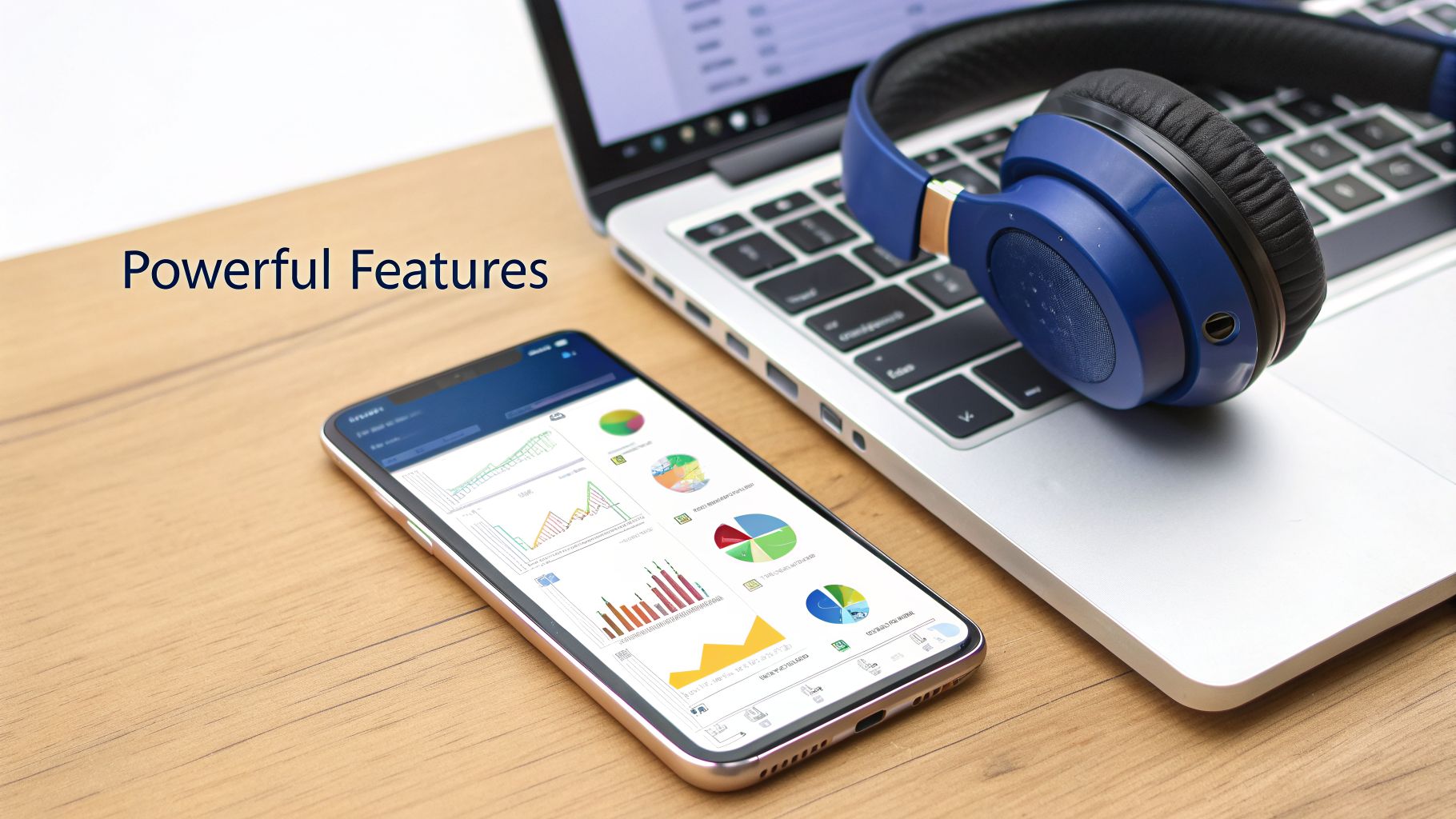
Let's walk through the tools that ambitious Dallas companies should have on their checklist. These are the features that turn your phone system from a necessary expense into a genuine competitive advantage.
The Digital Receptionist and the Mobile Office
First up is the Auto Attendant, which is your digital receptionist. This feature professionally greets every single caller with a custom menu ("Press 1 for Sales, Press 2 for Support"), making sure they get to the right person or department instantly.
For a busy law firm in the Arts District or a growing service company, this one feature eliminates missed calls and makes you sound like a major enterprise, no matter how big or small you are.
Next, mobile apps and unified communications are an absolute must for any team spread across the Dallas-Fort Worth metroplex. These apps turn any employee's smartphone into a secure extension of the office phone system.
This means your sales reps in Plano or your technicians out in Irving can make and receive calls from the main business number, check voicemails, and message colleagues—all from a single, secure app. It makes the "work from anywhere" model a reality.
The goal is to build a feature checklist that directly addresses your unique business needs, turning communication into a competitive advantage. Focus on tools that save time, improve the customer journey, and give you better operational insight.
And for businesses that rely on appointments, integrating powerful automated phone call reminder systems is a total game-changer. These tools can slash no-shows and free up your staff from having to make hundreds of confirmation calls.
To really see the difference, it helps to compare the old way with the new. A traditional PBX system offers very little beyond a basic dial tone, while a modern cloud platform is packed with tools designed to make your business run smoother.
Feature Comparison Legacy PBX vs Modern Cloud Phone System
| Feature | Legacy PBX System | Modern Cloud System (e.g., SnapDial) |
|---|---|---|
| Call Routing | Basic transfers, often manual | Auto-Attendant, skill-based routing, ring groups |
| Mobile Access | None, tied to a desk phone | Fully-featured mobile app for iOS & Android |
| Voicemail | Audio-only, dial-in access | Visual Voicemail (transcribed), voicemail-to-email |
| Analytics | None or very basic call logs | Real-time analytics dashboard with performance KPIs |
| Call Recording | Requires expensive, separate hardware | Built-in, on-demand or automatic call recording |
This side-by-side view makes it clear: a modern system isn't just a phone—it's a complete communication toolkit.
Essential Tools for Productivity and Insight
Beyond just routing calls, the right system gives you tools to help your team work smarter, not harder. These features provide both everyday convenience and the data you need to see what’s really happening in your business.
- Call Recording: This is an indispensable tool for training and quality control. It lets managers review customer conversations, verify order details, and make sure service standards are being met every time.
- Visual Voicemail: Instead of having to listen to voicemails one by one, this feature transcribes them into text. Your team can scan messages right in their email or mobile app, prioritize callbacks, and respond much faster.
- Analytics Dashboard: Knowledge is power. A good analytics dashboard gives you a real-time command center for your call performance. You can track call volume, wait times, missed calls, and peak hours to make smart decisions about staffing and workflows.
These core features aren't just luxuries; they are the foundation of a modern, efficient communication platform. By picking a system that includes these tools, Dallas businesses can dramatically improve how they operate and elevate the experience they deliver to every customer.
When your business runs on a high volume of calls—think a bustling support desk or a driven sales team—the basic phone features just won’t cut it. You need specialized tools that can handle a constant stream of conversations without letting the customer experience suffer. This is where advanced call center capabilities, once only available to massive enterprises, are now within reach for any Dallas business ready to compete.

This shift is happening just in time. The U.S. telemarketing and call center industry is on track to hit a $28.5 billion market size by 2026. Yet, a staggering 79% of executives admit their outdated phone systems are a major roadblock to delivering better service. By adopting the right tools, savvy Dallas businesses can leave the competition in the dust. You can dig into the numbers and see how modern platforms address these problems by reading these industry insights on IBISWorld.
Intelligent Call Management for a Better Customer Journey
The heart of any high-volume setup is the intelligent call queue. Think of it as a smart, digital velvet rope for your callers. Instead of hitting a frustrating busy signal, customers are placed neatly in line and greeted with professional announcements.
More advanced systems take it a step further with a feature called queue callback. This lets a caller press a button to hang up, keep their spot in line, and get an automatic call back the second an agent is free. For a busy Dallas e-commerce shop or service provider, this one feature can be a game-changer, slashing caller frustration and abandoned calls.
These advanced tools aren't just about efficiency; they're about respecting your customer's time. A smooth, professional call handling process tells callers that your business is organized, capable, and values their business.
This is a key part of what makes modern VoIP call center solutions so powerful. They transform the waiting experience from a negative into a managed, professional touchpoint.
Data-Driven Tools for Peak Performance
To run a high-performing team in a competitive market like Dallas, you absolutely need visibility. A modern business phone system gives managers the real-time dashboards and detailed reports needed to make smart, data-driven decisions. These tools help you:
- Monitor Live Activity: See exactly how many calls are in the queue, check current wait times, and know which agents are available or on a call at a glance.
- Track Performance KPIs: Measure key metrics like average handle time, calls answered, and abandonment rates to spot your top performers and identify areas for coaching.
- Optimize Staffing: Use historical call volume data to accurately predict your peak hours. This ensures you can schedule your team accordingly and are never caught understaffed during a rush.
By using these analytics, you stop guessing and start strategizing. You give your team the support they need to succeed and ensure your customers get the best possible service, every single time.
How to Choose the Right Dallas Phone System Provider
The fanciest phone system in the world is useless if the partner behind it is nowhere to be found when you need them. When you’re looking at business phone systems Dallas has to offer, you’re doing more than just comparing features. You're picking a partner who will be there on migration day and every day after.
The single most critical factor in your decision is finding a provider who is obsessed with making your transition a success.
This all starts with what we call a "white-glove" setup. Think about it like this: you could try to move your entire office yourself, or you could hire a professional crew that handles every last detail. A top-tier provider is that professional crew. They manage the entire switch—from moving your phone numbers to setting up call flows—to guarantee zero downtime.
Look for Local Texas-Based Support
When a critical issue pops up at 3 PM on a Friday, the last thing you want is to get stuck in a phone tree for an overseas call center that has no idea what your business does. Having local, Texas-based support is a massive advantage.
Local experts get the Dallas market. They can give you fast, real-world help when it matters most.
A provider’s support model tells you everything you need to know about their real commitment. A true partner offers accessible, expert help, not just a product. They become an extension of your team, making sure your communication engine never sputters.
This local touch goes way beyond just fixing problems. A dedicated partner will help you wring every ounce of value out of your system. You can see what a premier local provider brings to the table by exploring our deep dive into Dallas VoIP phone systems.
Your Provider Evaluation Checklist
To cut through the marketing fluff and find a real partner, you need a clear scorecard. Use this checklist to vet every potential provider and make sure they meet the non-negotiable standards for reliability, transparency, and security.
Transparent All-Inclusive Pricing: Vague pricing is a huge red flag. A trustworthy provider offers a straightforward, per-user, per-month cost that includes everything—all features, support, and unlimited calling. This kills any chance of surprise fees and makes your budget predictable.
A Rock-Solid Service Level Agreement (SLA): An SLA isn't just jargon; it's a written guarantee of uptime. Look for a provider that puts a 99.999% uptime promise in writing. That translates to just minutes of potential downtime per year, and for any serious business, it's a must-have.
Robust Security Measures: Your conversations are valuable and often confidential. Make sure the provider uses end-to-end encryption for all calls and messages and that their data centers are compliant with tough security standards like SOC 2. This is how you protect your business and your clients' private information.
White-Glove Migration and Onboarding: Will they do the heavy lifting for you? A great partner assigns you a dedicated project manager. This person owns the entire process—number porting, system configuration, and team training—to ensure a smooth, headache-free launch.
By focusing on these core criteria, you'll move way beyond a simple feature list. You’ll find a provider who acts as a genuine partner, helping your Dallas business communicate better and grow with confidence.
Your Smooth Migration and Setup Checklist
Thinking about switching your business phone system can feel like a massive headache. I get it. But moving to a modern cloud-based system doesn't have to be a project that grinds your business to a halt.
With a solid, step-by-step plan, you can ensure the transition to your new business phone systems in Dallas is completely seamless. This checklist is your game plan for a smooth launch, with zero disruption for your customers or your team.
A great provider doesn't just sell you a service; they act as your partner, guiding you through the entire process. They help you evaluate your real needs, manage the migration, and make sure you have the support you need long after you go live.
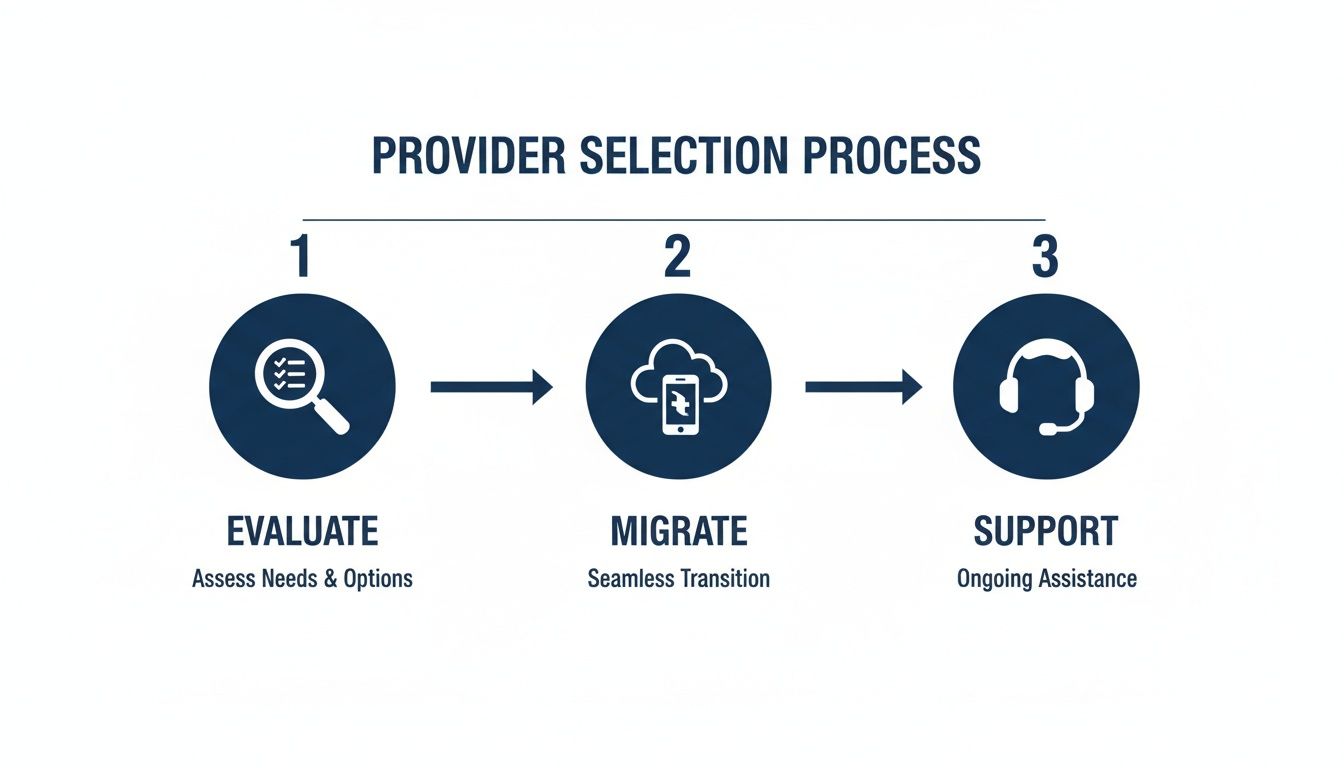
This process shows the difference between a simple vendor and a true partner. One sells you a product, but the other guides you from the initial assessment all the way through ongoing support for years to come.
The Migration Game Plan
Follow these steps, and you won’t miss a thing. A good partner will handle the heavy lifting, but being prepared on your end makes everything go that much faster.
Audit Your Current Setup: Before you can move forward, you need a crystal-clear picture of what you have now. Make a master list of every single phone number your business uses—main lines, fax numbers, and direct-dial numbers for key staff. Don't forget any numbers tied to alarm systems or specific marketing campaigns.
Map Your Call Flows: Now, think like a customer. How should your calls be handled? Sketch out your ideal auto-attendant menu ("Press 1 for Sales, Press 2 for Support…"). This is your chance to make things better, not just copy your old setup. Decide which phones ring for different departments and who gets the calls after hours.
Prepare Your Network: Cloud phone systems run on your internet connection. That means your connection's quality is everything. A reputable provider should test your network to confirm you have enough bandwidth for crystal-clear HD voice quality. This proactive step prevents frustrating issues like jitter or dropped calls before they ever happen.
The single most critical part of this entire process is number porting. This is the regulated procedure of moving your existing phone numbers to the new provider. A white-glove setup means your provider manages this whole process for you, ensuring your numbers switch over without any service interruption whatsoever.
- Schedule Team Training: A powerful new system is only as good as the team using it. Be sure to schedule a dedicated training session. This gets everyone comfortable with their new desk phones, mobile apps, and powerful features like visual voicemail and call recording right from day one.
By following this structured approach, you take all the mystery out of the migration. What could feel like a stressful IT project becomes a smooth, controlled upgrade that sets your Dallas business up for success.
Got Questions? We've Got Answers
Making the final call on a new phone system can feel like a big step, especially when you're moving your Dallas business to a new technology. To help you feel confident in your choice, we’ve put together straightforward answers to the questions we hear most often.
What’s the Real Cost of a Modern Phone System?
Forget the massive upfront hardware costs of old-school systems. Modern cloud phone systems run on a simple subscription, and for most small to mid-sized Dallas businesses, that usually lands between $20 to $40 per user, per month.
The real trick is to find a provider with one all-inclusive price. This means your monthly bill covers everything—all features, unlimited calling, and support. It protects you from those frustrating surprise fees and makes it dead simple to budget for as you add new team members.
Can We Keep Our Existing Business Phone Numbers?
Yes, absolutely. You don't have to give up the numbers your customers already know and trust. The process is called number porting, and it’s a standard, regulated procedure that lets you move your current local and toll-free numbers to your new provider.
A good provider will handle this entire "white-glove" migration for you. Their job is to make sure the switch happens behind the scenes with zero downtime, so your customers won't even notice a change—they just keep calling the same numbers they always have.
Just How Reliable Is a Cloud Phone System?
This is a big one, and the short answer is: extremely reliable. Top-tier cloud platforms are built for resilience and come with a Service Level Agreement (SLA) that guarantees uptime, often as high as 99.999%. That translates to just a few minutes of potential downtime over an entire year.
Because your system lives in the cloud, it’s also immune to local problems. If your Dallas office ever loses power or internet, calls don't just stop. They can be automatically rerouted to mobile phones or another location, making sure you never miss that critical call.
Ready to see how a modern communication platform can transform your Dallas business? SnapDial offers a complete solution with white-glove setup and 24/7 Texas-based support. Discover a better way to communicate at https://snap-dial.com.