In a competitive market, a high-performing call center is no longer just a support function; it's the engine of customer retention and brand loyalty. The old playbook of simply answering calls quickly is obsolete. Today, contact centers face new challenges: managing distributed teams, navigating complex customer expectations, and integrating sophisticated communication technologies. To succeed, managers must adopt a strategic, data-driven approach.
This guide moves beyond generic advice to provide 10 essential call center management best practices, offering actionable strategies you can implement immediately. You will discover how to transform your operations from a reactive cost center into a proactive, value-generating asset. We'll explore how to leverage the full capabilities of modern cloud phone systems to optimize everything from queue management and agent scheduling to quality assurance and performance analytics.
Inside, you will learn how to:
- Implement real-time analytics to make smarter staffing decisions.
- Develop robust agent training programs that boost First Contact Resolution (FCR).
- Optimize omnichannel strategies for a seamless customer journey.
- Build a resilient and engaged remote or hybrid workforce.
These proven methods are designed to help you reduce operational costs, boost agent performance, and deliver the exceptional service your customers demand. Let's dive into the blueprint for building a world-class contact center operation that directly contributes to your bottom line and sets a new standard for customer satisfaction.
1. Real-Time Queue Management, Analytics, and Callback Optimization
Among the most impactful call center management best practices is the strategic use of real-time data to dynamically manage call flow and enhance customer experience. This involves actively monitoring call queues, agent status, and wait times to make immediate adjustments. Instead of letting customers languish on hold, this approach uses technology to provide better alternatives, significantly reducing frustration and abandonment rates.
The core principle is to replace passive waiting with proactive solutions. By integrating smart queues and callback options, you give customers control. For example, a cloud-based phone system can offer a caller the option to receive a return call once they reach the front of the line, respecting their time and improving their perception of your service. Companies like Apple have seen hold abandonment drop by as much as 65% after implementing this feature.
How to Implement This Practice
Effective queue management relies on visibility and agility. Use your VoIP system’s live dashboards to spot developing bottlenecks and reallocate agents to high-volume queues before wait times escalate.
- Set Realistic Targets: Establish key performance indicators (KPIs) like Average Speed of Answer (ASA) and abandonment rate based on industry benchmarks.
- Promote Callback Options: Clearly announce the virtual queue or callback feature in your Interactive Voice Response (IVR) menu. A simple message like, "Press 1 to hold your place in line and receive a call back," can dramatically improve satisfaction.
- Leverage Analytics: Regularly review call traffic patterns and callback acceptance rates. This data is crucial for optimizing staffing schedules and predicting peak times. To dive deeper into using this data, learn more about the power of real-time call analytics.
- Manage Expectations: When offering a callback, provide a realistic timeframe and consider sending an SMS confirmation to reassure the customer.
By turning a negative waiting experience into a positive, controlled one, you directly improve customer satisfaction and operational efficiency.
2. Omnichannel Contact Strategy
A truly effective call center management best practice is to move beyond multichannel support and embrace a fully integrated omnichannel contact strategy. This approach unifies various communication channels like phone, email, chat, social media, and SMS into a single, cohesive platform. It allows customers to engage with your business on their preferred medium and switch between channels without losing context, as agents have access to the complete conversation history.
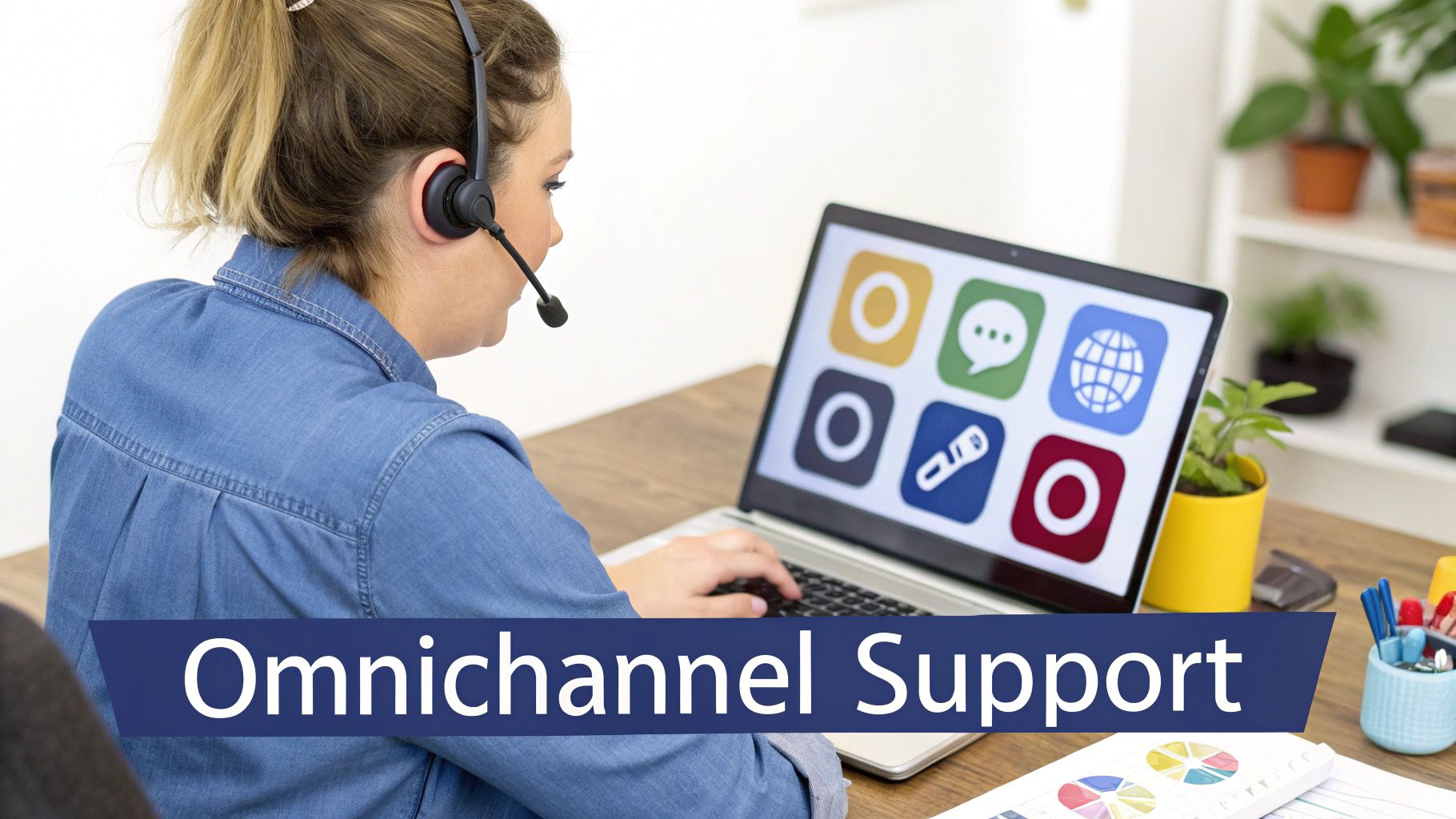
The goal is to create a seamless and consistent customer experience, regardless of how or where the conversation starts. For instance, a customer might begin a query via web chat and then need to escalate to a phone call. In an omnichannel system, the agent answering the call can immediately see the entire chat transcript, eliminating the need for the customer to repeat themselves. Companies like Netflix and Apple excel at this, providing unified support that builds customer trust and resolves issues faster.
How to Implement This Practice
Transitioning to an omnichannel model requires the right technology and a customer-centric mindset. It’s about meeting your customers where they are and making it effortless for them to get help.
- Prioritize Key Channels: Analyze your customer demographics to determine which channels they use most. Focus on integrating these high-traffic channels first before expanding.
- Use Unified Reporting: Your contact center platform should provide a single dashboard to measure performance across all channels. Track metrics like first-contact resolution and customer satisfaction to identify areas for improvement.
- Train Agents Methodically: Ensure agents are experts on one or two primary channels before training them on others. This prevents them from becoming overwhelmed and ensures service quality remains high.
- Empower Remote Agents: Leverage a cloud phone system with a robust mobile app to ensure your remote and hybrid teams can manage all communication channels from anywhere, maintaining service consistency.
By adopting this strategy, you transform your support from a series of disconnected interactions into a single, ongoing conversation. To better understand this evolution, you can learn more about the differences between a call center and a modern contact center.
3. Workforce Management and Scheduling Optimization
One of the most critical call center management best practices is the strategic implementation of Workforce Management (WFM). This discipline involves forecasting call volumes and scheduling agents to meet demand precisely, balancing exceptional service levels with controlled labor costs. Instead of reactive staffing based on guesswork, WFM uses data to predict needs, preventing the chaos of understaffing and the expense of overstaffing.
The core principle is to align your most valuable resource, your agents, with customer demand. By analyzing historical data, seasonal trends, and even upcoming marketing campaigns, you can create schedules that ensure the right number of agents with the right skills are available at all times. Companies like Delta Airlines use sophisticated WFM to manage over 40,000 agents globally, while AT&T leveraged predictive analytics to cut overstaffing by 15% without impacting service quality.
How to Implement This Practice
Effective WFM hinges on accurate forecasting and dynamic schedule management. Use your call center software’s historical data and real-time dashboards to build a robust scheduling model that can adapt to changing conditions.
- Build a Strong Data Foundation: Start by analyzing at least six to twelve months of historical call data from your VoIP system. This will help you identify clear patterns related to time of day, day of the week, and seasonality.
- Forecast with Context: Don't just rely on historical data. Factor in known business events like product launches, marketing promotions, or service outages that will inevitably impact call volume.
- Introduce Schedule Flexibility: Offer options like shift swapping, split shifts, or preferred hours to improve agent satisfaction and retention. Happy agents are more likely to adhere to their schedules.
- Monitor Real-Time Adherence: Use live dashboards to track how closely agents are sticking to their assigned schedules (adherence). Address deviations constructively to keep service levels on track, but build in reasonable buffers for unexpected needs.
- Continuously Validate and Refine: Compare your forecasts against actual call volumes daily and weekly. Use these insights to continuously refine your forecasting models for greater accuracy over time.
By mastering workforce management, you transform scheduling from an administrative chore into a strategic advantage that elevates customer experience and protects your bottom line.
4. Quality Assurance and Call Monitoring Programs
A cornerstone of effective call center management best practices is a robust Quality Assurance (QA) program built around systematic call monitoring. This process involves evaluating agent interactions against a set of predefined standards to ensure consistent service quality, maintain compliance, and identify opportunities for improvement. Rather than being a punitive measure, modern QA is a developmental tool that blends technology, feedback, and coaching to elevate the performance of the entire team.
The goal is to move from subjective assessments to objective, data-driven insights. By analyzing recorded calls, you can pinpoint specific agent behaviors that lead to positive outcomes, like high customer satisfaction scores, and replicate them across your team. Companies like Verizon use call monitoring to ensure technical support accuracy, while Southwest Airlines leverages it to maintain a consistent and friendly brand voice, turning every interaction into a brand-building opportunity.
How to Implement This Practice
A successful QA program is collaborative, transparent, and focused on growth. Use your cloud phone system’s built-in features to record calls and create a structured framework for review and feedback.
- Develop Clear Scoring Criteria: Create an objective scorecard with criteria that align directly with your business goals, such as First Call Resolution (FCR), adherence to scripts, and demonstration of empathy.
- Use Random Sampling: Monitor a random selection of calls for each agent to ensure a fair and unbiased view of their typical performance, avoiding the perception of favoritism.
- Focus on Coaching: Frame QA sessions as coaching opportunities. Use call recordings to review specific moments, celebrate successes, and collaboratively identify areas for skill development.
- Create an Exemplar Library: Build a library of "best-in-class" recorded calls that demonstrate excellence. This serves as a powerful, real-world training asset for both new hires and veteran agents. To get started, you can find out more about the benefits of call recording for your business.
By systematically monitoring and coaching, you transform quality assurance from a simple checklist into a powerful engine for continuous improvement and customer satisfaction.
5. First Contact Resolution (FCR) Optimization
Among the most critical call center management best practices, optimizing for First Contact Resolution (FCR) delivers a powerful dual benefit: it significantly boosts customer satisfaction while lowering operational costs. The goal of FCR is to completely resolve a customer's issue during their very first interaction, eliminating the need for follow-up calls, transfers, or escalations. This approach empowers agents with the tools, knowledge, and authority to provide definitive solutions on the spot.
The core principle is to replace fragmented, multi-step support processes with a single, effective interaction. By giving agents access to unified customer data, comprehensive knowledge bases, and the autonomy to make decisions, you remove the friction that leads to customer frustration and repeat contacts. For example, USAA achieves an FCR rate of over 95% by equipping its agents with complete customer context and the authority to solve problems directly. This not only delights customers but also frees up agent time to handle new incoming queries, improving overall efficiency.
How to Implement This Practice
Achieving a high FCR rate requires a strategic blend of technology, training, and empowerment. Your cloud phone system's ability to integrate with other business tools is fundamental to providing agents with the complete picture they need.
- Provide Unified Customer Context: Integrate your VoIP system with your CRM and other backend platforms. This gives agents a 360-degree view of the customer’s history, past purchases, and previous interactions right on their screen, preventing the customer from having to repeat themselves.
- Invest in a Knowledge Base: Create and maintain a centralized, easily searchable knowledge management system. This resource should contain step-by-step guides, troubleshooting procedures, and clear policy information, allowing agents to find accurate answers quickly.
- Empower Your Agents: Grant agents the authority to make decisions and offer solutions within predefined limits, such as issuing a credit or expediting a shipment. This autonomy, famously practiced by Ritz-Carlton, prevents delays and shows customers you trust your team to do what's right.
- Analyze Repeat Contacts: Use call analytics and recordings to identify the most common reasons for repeat calls. This data reveals gaps in your processes, training materials, or agent knowledge that need to be addressed to improve your FCR rate.
6. Agent Training and Development Programs
Even the most advanced technology is only as effective as the people using it. This is why investing in comprehensive agent training and development programs is a cornerstone of call center management best practices. This goes far beyond initial onboarding; it involves a continuous commitment to enhancing skills, product knowledge, and career growth to build a competent, motivated, and loyal team.

The core principle is to transform the agent role from a temporary job into a long-term career path. By providing robust training, you equip your team not only to handle customer inquiries effectively but also to feel valued and engaged. Companies that excel in this area see tangible results; for instance, Comcast reduced its first-year turnover from 45% to 28% by implementing peer mentoring. Similarly, Zappos famously invests heavily in its culture-first training philosophy, building a highly skilled and dedicated workforce.
How to Implement This Practice
Effective training programs are strategic, ongoing, and tailored to both business needs and individual agent performance. They blend different learning styles and use technology to identify specific areas for improvement, creating a cycle of continuous development.
- Develop a Blended Curriculum: Combine instructor-led sessions, e-learning modules, and on-the-job coaching to cater to diverse learning preferences. To foster a culture of excellence and equip your agents with essential customer interaction skills, leverage a modern customer service training playbook.
- Assign Mentors: Pair new hires with experienced agents for their first 30-90 days. This provides immediate support, accelerates learning, and helps integrate new team members into the company culture.
- Utilize Call Recordings for Coaching: Use your VoIP system’s call recording and monitoring features to pinpoint specific coaching opportunities. Reviewing real-life calls together is one of the most effective ways to refine soft skills and procedural adherence.
- Create Clear Career Paths: Show agents a clear trajectory for growth within the organization. Tie the completion of advanced training modules and certifications directly to opportunities for promotion and increased responsibility to reduce agent churn.
7. Customer Satisfaction and Net Promoter Score (NPS) Programs
One of the most crucial call center management best practices involves systematically measuring customer sentiment through targeted feedback programs. Customer Satisfaction (CSAT) and Net Promoter Score (NPS) are two powerful methodologies that provide a direct line to the customer's voice, turning subjective interactions into actionable data for coaching, process refinement, and strategic planning.
The core principle is to move from assuming customer happiness to actively measuring it. CSAT typically gauges satisfaction with a specific, recent interaction, while NPS measures long-term loyalty by asking how likely a customer is to recommend your company. For instance, Amazon targets an NPS above 50, using the feedback to relentlessly drive improvements, while Southwest Airlines achieves scores over 70 by empowering employees to create positive experiences.
How to Implement This Practice
Integrating feedback surveys directly into your call center workflow is key to collecting consistent and timely data. Use your VoIP system’s automated tools to deploy these surveys immediately after an interaction, when the experience is still fresh in the customer’s mind.
- Automate Post-Call Surveys: Utilize your phone system’s IVR capabilities to automatically offer a short, 1-3 question survey after a call ends. This maximizes response rates without adding manual work for agents.
- Segment Your Data: Analyze CSAT and NPS results by agent, team, department, and call type. This helps you pinpoint whether a low score is due to a systemic process issue or an individual coaching opportunity.
- Act on Feedback Quickly: Implement a "closed-loop" process where managers follow up with detractors (customers who give a low NPS score) within 24-48 hours. This simple act can turn a negative experience into a positive one and prevent churn.
- Share Results and Reward Success: Make performance dashboards with CSAT and NPS results visible to everyone. Link positive scores and improvements to recognition programs and coaching sessions to foster a customer-centric culture.
8. Performance Metrics and KPI Management
Establishing clear, measurable targets is a cornerstone of effective call center management best practices. This involves defining key performance indicators (KPIs) that align individual agent and team performance directly with overarching business objectives. Instead of managing in the dark, this data-driven approach uses robust reporting systems to monitor performance, identify trends, and take corrective action proactively.
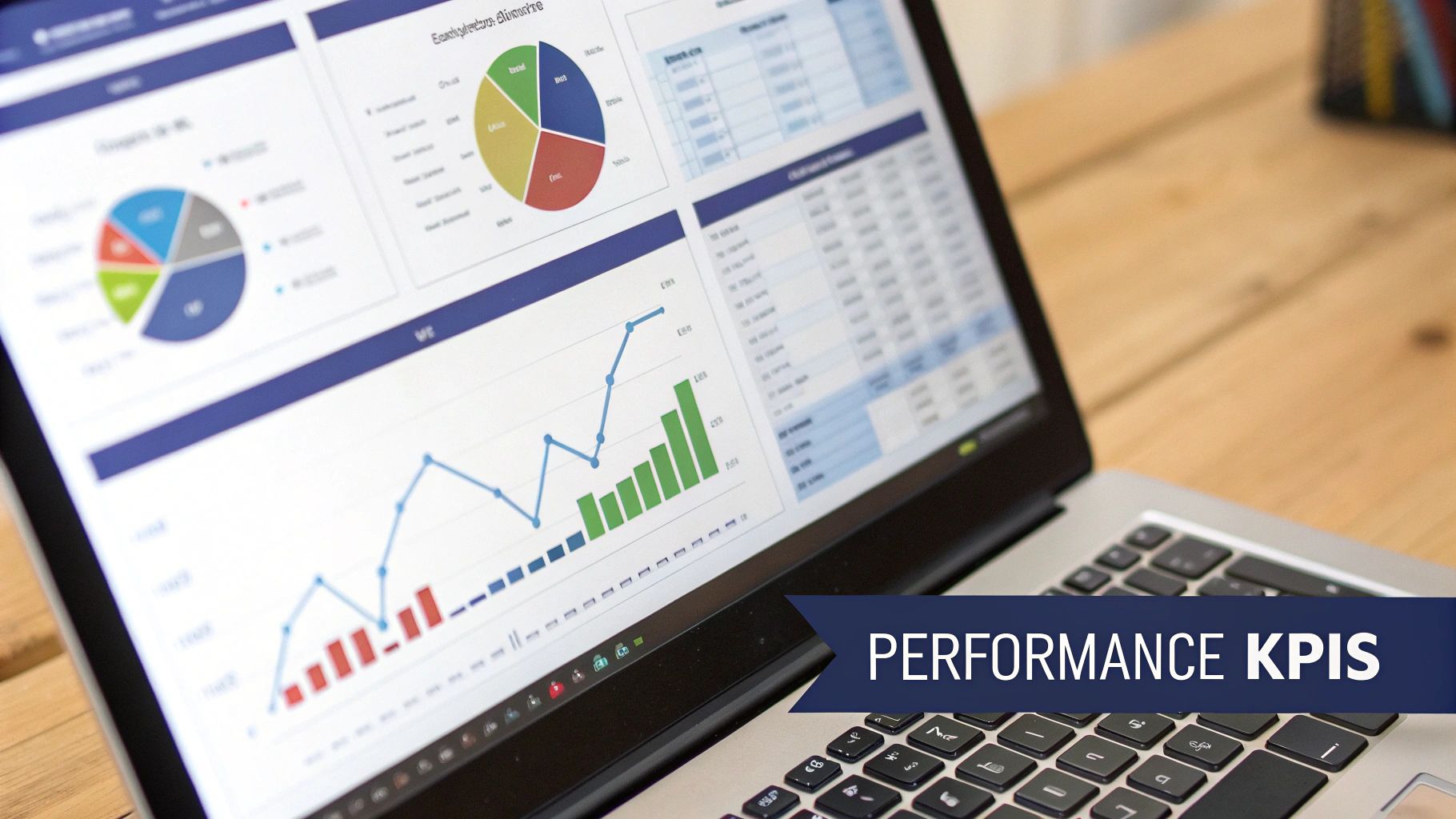
The principle here is "what gets measured gets managed." By tracking the right metrics, you create a culture of accountability and continuous improvement. For example, a healthcare provider might monitor First Call Resolution (FCR) for appointment scheduling to ensure patient satisfaction, while a bank's fraud department would focus on Average Handle Time (AHT) to resolve urgent security issues quickly. Success lies in choosing metrics that truly reflect both efficiency and customer experience.
How to Implement This Practice
Effective KPI management requires a balance between different types of metrics and transparent communication with your team. Use your VoIP system’s built-in reporting and analytics to track performance against set targets in near real-time.
- Select Critical Metrics: Avoid metric overload by choosing 5-10 core KPIs. Focus on a mix of efficiency metrics (like AHT) and quality metrics (like Customer Satisfaction Score or CSAT).
- Set Realistic Targets: Use historical data and industry benchmarks, like those from Gartner or COPC, to establish achievable goals for your team.
- Balance Speed and Quality: Don't just focus on speed. Emphasize metrics that reflect the quality of the interaction. For a broader view, consult this guide on the essential metrics of customer service to see how different indicators work together.
- Conduct Regular Reviews: Hold weekly or bi-weekly meetings to discuss KPI trends with your team. Use these sessions to celebrate wins, identify challenges, and collaborate on solutions.
- Tie Metrics to Recognition: Link performance against key metrics to incentive programs or non-monetary recognition to motivate agents and drive desired behaviors.
9. Employee Engagement and Retention Programs
High agent turnover is a persistent challenge in the contact center industry, directly impacting service quality, team morale, and operational costs. A critical component of call center management best practices is implementing robust employee engagement and retention programs. This approach moves beyond simply filling seats to actively creating a workplace culture where agents feel valued, supported, and see a future for themselves within the organization.
The core principle is to treat your agents as your most valuable asset. A happy, engaged agent is far more likely to provide the empathetic and effective service that creates loyal customers. Companies renowned for their service, like Zappos, have built their entire brand on this idea, achieving industry-low turnover rates by investing heavily in culture, comprehensive benefits, and clear career paths. This investment pays for itself through reduced hiring costs, increased productivity, and superior customer experiences.
How to Implement This Practice
Building an engaging environment requires a multi-faceted strategy that addresses compensation, culture, and career growth. It’s about creating a holistic employee experience that encourages top performers to stay and thrive.
- Create Clear Advancement Paths: Don’t let the agent role be a dead end. Develop and communicate clear paths to senior agent, team lead, trainer, or quality assurance specialist roles. Offering professional development and tuition reimbursement reinforces this commitment.
- Prioritize Flexibility: High-pressure environments benefit greatly from flexible scheduling. Use your cloud phone system’s capabilities, like a mobile app, to effectively support remote and hybrid work models, giving agents more control over their work-life balance.
- Implement Recognition Programs: Acknowledge and celebrate achievements publicly. Implement peer-to-peer recognition programs where agents can praise colleagues for outstanding work, and regularly highlight top performers in team meetings.
- Conduct 'Stay' Interviews: Instead of only conducting exit interviews, proactively talk to your best agents. Ask what they enjoy about their role, what keeps them at the company, and what could be improved. This provides invaluable, actionable feedback.
- Ensure Competitive Compensation: Regularly benchmark your agent salaries and benefits against the local labor market. Fair compensation is the foundation of employee satisfaction and is non-negotiable for retaining talent.
By focusing on the well-being and professional growth of your team, you create a stable, motivated workforce capable of delivering consistently excellent service.
10. Cross-Training and Skill-Based Routing
A cornerstone of modern call center management best practices is moving beyond simple call distribution to intelligent, skill-based routing. This strategy matches incoming customer queries with the agent best equipped to handle them based on their specific knowledge, experience, or language proficiency. It's a direct path to higher First Contact Resolution (FCR) rates, shorter handle times, and a vastly improved customer experience.
The core principle is efficiency through specialization. Instead of a call bouncing between departments, it is directed precisely where it needs to go from the start. For example, a healthcare provider can route calls about specific insurance plans directly to agents trained on those policies. This eliminates transfers and ensures the customer speaks with an expert immediately, building confidence and resolving issues faster.
How to Implement This Practice
Successful skill-based routing depends on two key elements: a well-defined agent skill inventory and a flexible call routing system. Your cloud phone system should allow you to create routing rules that map IVR selections or caller data to specific agent skill sets.
- Map Skills to Customer Needs: Start by identifying the most common reasons customers call. Then, map these issue types to the specific skills, knowledge areas, or languages required to resolve them effectively.
- Develop a Cross-Training Program: Don't limit agents to a single specialty. Create a curriculum to cross-train each agent in at least two or three complementary skill areas. This builds a more versatile and resilient team, especially during unexpected call surges.
- Maintain an Accurate Skill Inventory: Regularly update agent profiles within your VoIP system to reflect their current skills and proficiency levels (e.g., basic, proficient, expert). This ensures your routing logic remains accurate. To learn how to configure this, discover more about intelligent call routing.
- Incentivize Skill Development: Encourage continuous improvement by offering incentives or recognition for agents who acquire new skills and achieve higher proficiency levels.
- Monitor and Validate: Use metrics like FCR and Average Handle Time, segmented by skill group, to validate that your routing strategy is working. This data will highlight opportunities for further training and process refinement.
By investing in cross-training and leveraging skill-based routing, you transform your call center from a general queue into a highly efficient, specialized resolution engine.
10-Point Comparison of Call Center Best Practices
| Solution | Implementation Complexity 🔄 | Resource Requirements ⚡ | Expected Outcomes 📊⭐ | Ideal Use Cases 💡 | Key Advantages ⭐ |
|---|---|---|---|---|---|
| Real-Time Queue Management, Analytics, and Callback Optimization | High — real-time routing, predictions, integrations 🔄 | Robust real-time infra, dashboards, WFM integration, monitoring staff ⚡ | Reduced wait/abandonment; improved utilization and FCR; faster response 📊⭐ | High-volume or multi-site centers with peak spikes | Lower abandonment; transparent wait times; predictive callbacks ⭐ |
| Omnichannel Contact Strategy | High — multi-channel integrations and unified UI 🔄 | Platform integrations (voice, chat, email, social), training, CRM sync ⚡ | Consistent cross-channel experience; faster resolutions with context 📊⭐ | Brands with diverse customer channel preferences; remote agents | Unified history; channel flexibility; improved CX ⭐ |
| Workforce Management and Scheduling Optimization | Moderate — forecasting models and scheduling rules 🔄 | WFM software, historical data, planners/analysts, adherence tools ⚡ | Better SLA adherence; reduced labor costs; balanced staffing 📊⭐ | Large or variable-demand centers (seasonal/24×7) | Efficient staffing; reduced over/understaffing; forecast-driven decisions ⭐ |
| Quality Assurance and Call Monitoring Programs | Low–Moderate — recording, scoring, and review workflows 🔄 | Recording/storage, QA team, scoring rubrics, compliance tooling ⚡ | Consistent service quality; training insights; compliance evidence 📊⭐ | Regulated industries or training-focused contact centers | Identifies coaching needs; protects compliance; improves quality ⭐ |
| First Contact Resolution (FCR) Optimization | Moderate — KM, permissions, and system integrations 🔄 | Knowledge base, CRM/backend access, agent empowerment, training ⚡ | Higher FCR; fewer repeat contacts; lower operational cost 📊⭐ | Complex-product support, banking, tech support where single-touch matters | Reduced rework; higher satisfaction and loyalty ⭐ |
| Agent Training and Development Programs | Moderate — curriculum design and ongoing coaching 🔄 | Trainers, LMS/content, time for onboarding and refreshers ⚡ | Improved productivity; lower turnover; higher service quality 📊⭐ | High-turnover centers or those scaling quickly | Better retention; stronger agent capability; career paths ⭐ |
| Customer Satisfaction and NPS Programs | Low — survey deployment and analytics setup 🔄 | IVR/email/SMS survey tools, analytics, closed-loop processes ⚡ | Actionable voice-of-customer insights; predict retention 📊⭐ | Organizations prioritizing CX measurement and continuous improvement | Direct customer feedback; ties CX to business outcomes ⭐ |
| Performance Metrics and KPI Management | Moderate — metric definition, dashboards, governance 🔄 | Reporting tools, data governance, scorecards, change management ⚡ | Clear targets; data-driven coaching and resourcing; trend visibility 📊⭐ | Ops needing accountability, benchmarking, and continuous improvement | Objective measurement; guides coaching and incentives ⭐ |
| Employee Engagement and Retention Programs | Moderate–High — cultural change and ongoing programs 🔄 | Budget for rewards/benefits, HR programs, leadership commitment ⚡ | Lower turnover; higher morale and service consistency 📊⭐ | Tight labor markets or high-cost turnover environments | Improves retention, morale, and employer brand ⭐ |
| Cross-Training and Skill-Based Routing | Moderate — skill inventories and routing rules 🔄 | Training for multiple skills, routing system support, maintenance ⚡ | Higher FCR; fewer transfers; better expertise utilization 📊⭐ | Centers with varied issue types requiring specialists | Right-agent matching; reduced handle time; career development ⭐ |
Putting It All Together: Your Path to a Modern Call Center
Navigating the landscape of modern customer service requires more than just answering calls; it demands a strategic, integrated approach. The ten call center management best practices detailed in this guide are not isolated tactics but interconnected pillars that support a single, overarching goal: building an efficient, resilient, and customer-centric operation that drives business growth. From optimizing real-time queues and implementing skill-based routing to fostering agent development and meticulously tracking performance, each element plays a crucial role in creating exceptional experiences.
The journey from a reactive support desk to a proactive value center is a continuous one. It begins with the understanding that every best practice, whether it’s a sophisticated workforce management schedule or a carefully crafted omnichannel strategy, is fundamentally enabled by technology. Legacy systems create data silos and operational friction, making it nearly impossible to achieve true integration. A modern, cloud-based communications platform acts as the central nervous system for your entire operation, unifying data, streamlining workflows, and empowering your team with the tools they need to succeed.
Key Takeaways for Immediate Impact
As you move forward, focus on the powerful synergy between these strategies. Remember that a well-designed Quality Assurance program is only as effective as the agent training that follows it. Similarly, striving for a high First Contact Resolution (FCR) rate is directly linked to implementing skill-based routing and providing agents with comprehensive knowledge resources.
Consider these core principles as your guiding compass:
- Empowerment Through Technology: Your agents are your most valuable asset. Equip them with a platform that offers real-time analytics, seamless call management features, and integrated access to customer information. This technological foundation is non-negotiable for implementing modern call center management best practices.
- Data-Driven Decisions: Move beyond guesswork. Leverage robust reporting and analytics to understand everything from peak call volumes and agent performance to customer satisfaction trends. Use this data to refine scheduling, identify training gaps, and optimize your IVR and call queues.
- The Agent and Customer Experience are Linked: A happy, engaged agent is far more likely to create a happy, loyal customer. Investing in employee engagement, continuous training, and fair performance metrics directly translates to improved CSAT, NPS, and customer retention.
- Adaptability is the New Standard: The modern call center, whether in-office, remote, or hybrid, must be agile. An effective management strategy embraces flexibility, supported by cloud technology that allows agents to perform their best from anywhere while giving managers the visibility they need to maintain standards.
Your Actionable Next Steps
Transforming your call center can feel daunting, but progress is made through incremental, strategic steps. Begin by conducting a thorough audit of your current operations against the best practices outlined here. Identify one or two key areas for improvement. Perhaps it's formalizing your QA process with call recording and scoring, or maybe it's time to finally unify your communication channels into a true omnichannel experience.
The most critical first step is ensuring your technological infrastructure can support your ambition. Without the right tools, even the best-laid plans will falter. A unified communications platform provides the essential features like smart queues, IVR, call recording, and detailed analytics that underpin nearly every best practice on this list. By embracing these strategies and empowering your team with the right platform, you are not just managing a call center; you are building a powerful engine for customer loyalty and sustainable business success.
Ready to see how a modern cloud phone system can be the foundation for your success? Explore how SnapDial provides the all-in-one platform you need to implement these call center management best practices, from advanced call routing and real-time analytics to seamless integrations. Visit SnapDial to learn how you can unify your communications and elevate your customer experience today.