
In a competitive landscape where customer experience is the ultimate differentiator, every phone call represents a critical opportunity. It's a chance to build loyalty, solve a problem, or secure a sale. Conversely, a poorly handled call can mean losing a customer for good. For small and medium-sized businesses, mastering the art and science of call handling isn't just a ‘nice-to-have’–it's a fundamental pillar of sustainable growth.
Outdated phone systems and disjointed processes lead to frustrated customers, overwhelmed agents, and missed revenue. This is why establishing clear call handling best practices is so crucial. Effective call management transforms your voice communications from a simple utility into a powerful strategic asset, directly impacting customer satisfaction and your bottom line.
This guide moves beyond generic advice to provide 10 specific, actionable strategies that modern businesses can implement immediately. You will learn how to:
- Optimize for First-Call Resolution (FCR) to improve efficiency.
- Implement intelligent call routing and queue management to reduce wait times.
- Leverage proactive callback options to enhance the customer experience.
- Empower remote and hybrid teams with mobile-first communication tools.
From leveraging intelligent automation to ensuring compliance, these strategies are designed for practical application. We'll explore how modern cloud-based systems like SnapDial make these enterprise-level practices accessible and affordable for any team ready to elevate their customer interactions and drive meaningful business results.
1. First-Call Resolution (FCR) Focus
First-Call Resolution (FCR) is a critical performance metric and operational goal centered on completely resolving a customer's issue during their very first interaction. This approach eliminates the need for follow-up calls, transfers, or escalations, directly boosting customer satisfaction and operational efficiency. Instead of leaving callers in a loop of repeat contacts, a focus on FCR empowers your team to provide immediate, definitive solutions.
This strategy is one of the most impactful call handling best practices because it respects the customer's time and reduces the overall strain on your support resources. For small and mid-sized businesses, a high FCR rate means fewer repeat callers in the queue, allowing agents to handle new inquiries more effectively. Companies like Zappos and Apple Support have famously built customer loyalty by empowering their representatives with the tools and authority to solve problems on the spot.
How to Implement a First-Call Resolution Strategy
Achieving a high FCR rate requires a combination of agent training, powerful tools, and streamlined processes. The goal is to remove any barriers that prevent an agent from resolving an issue independently.
- Equip Agents with Context: Use a system like SnapDial that provides a complete view of the caller's history. When an agent can see past interactions, notes, and previous support tickets, they can diagnose the problem faster without asking the customer to repeat themselves.
- Empower Decision-Making: Train your team on company policies and product knowledge, but also give them the autonomy to make decisions, such as issuing a refund or offering a discount, without needing a manager's approval.
- Build an Accessible Knowledge Base: Create a centralized, searchable repository of solutions, guides, and troubleshooting steps. Integrating this directly into your calling platform allows agents to find answers while actively on a call.
- Track and Analyze FCR Rates: Use SnapDial's reporting and analytics portal to monitor your FCR rate. Analyze calls that were not resolved on the first attempt to identify common issues, knowledge gaps, or process bottlenecks that need addressing. While FCR is a primary goal, it is also important to understand its relationship with other metrics. You can explore how FCR and call duration influence each other and learn more about optimizing your Average Handle Time.
2. Intelligent Call Routing and Queue Management
Intelligent call routing is a sophisticated system that automatically directs incoming calls to the most qualified agent or department. It uses predefined rules based on factors like agent skills, availability, language, and workload. Paired with effective queue management, this practice ensures callers are connected to the right specialist quickly, which significantly cuts down on wait times, reduces transfers, and improves the quality of each interaction.
This approach is one of the foundational call handling best practices because it creates a more efficient and personalized customer journey from the moment a call is answered. For businesses, this means better resource allocation and higher resolution rates. Leading call center platforms like Genesys and Five9 popularized these systems for large enterprises, but modern VoIP solutions now make this technology accessible to businesses of all sizes, from healthcare clinics routing patients to specialized departments to tech support teams sending calls to product-specific experts.
How to Implement Intelligent Routing and Queue Management
Setting up an effective routing strategy involves understanding your customer needs and aligning them with your team's strengths. The goal is to create a seamless path from the caller to the solution.
- Pre-Qualify Calls with an Auto Attendant: Use a tool like SnapDial's auto attendant (IVR) to greet callers and present them with a menu. This initial step helps sort inquiries (e.g., "Press 1 for Sales, 2 for Support") and gathers crucial information before the call even reaches an agent.
- Establish Skill-Based Routing Rules: Assign specific skills or specialties to your agents within the system. You can then create rules that route calls about a particular product to an expert or direct calls from a specific region to a native-language speaker.
- Implement Smart Queue and Callback Options: During high-volume periods, prevent caller frustration and abandonment by using smart queue management. A queue callback feature gives callers the option to hang up and receive a call back when an agent is free, preserving their place in line.
- Monitor Real-Time Performance: Use your platform’s dashboard to watch key metrics like queue length, wait times, and agent availability. This data allows you to make immediate adjustments, such as reallocating agents to a busy queue, to manage call spikes effectively.
- Analyze and Refine Routing Strategies: Regularly review call logs and performance reports to identify trends. Analyzing this data can reveal opportunities to optimize your routing rules, adjust staffing, or identify areas where additional agent training is needed.
3. Comprehensive Call Recording and Quality Assurance
Comprehensive call recording and a structured quality assurance (QA) program are foundational call handling best practices for maintaining service standards, ensuring compliance, and driving continuous improvement. This approach involves systematically capturing customer interactions and reviewing them against a set of predefined criteria. By analyzing real conversations, businesses can identify coaching opportunities for agents, verify adherence to regulations, and pinpoint areas for process refinement.
This strategy moves beyond simply having recordings; it turns them into actionable business intelligence. For small and mid-sized businesses, this is crucial for maintaining a high level of service as the team grows. Financial services firms rely on recordings for SEC compliance, while healthcare providers use them for HIPAA verification and quality control. These recordings serve as a definitive record for dispute resolution and a powerful tool for agent training and development.
How to Implement a Call Recording and QA Program
An effective QA program requires the right tools to capture calls and a clear process for evaluating them. The goal is to create a consistent feedback loop that elevates agent performance and the overall customer experience.
- Systematically Capture All Interactions: Use a platform with built-in recording capabilities to automatically save all inbound and outbound calls. This ensures you have a complete data set for review, compliance, and training without needing separate software.
- Establish Clear QA Metrics: Define what a "good" call looks like for your business. Create a scorecard with criteria such as accuracy of information, adherence to script, tone of voice, and problem-solving effectiveness.
- Schedule Regular Review Sessions: Consistency is key. Dedicate time for managers or a QA specialist to review a set number of recordings per agent each month. This provides ongoing feedback and helps track performance trends over time.
- Leverage Recordings for Constructive Coaching: Use specific call examples during one-on-one coaching sessions. This allows you to provide concrete, evidence-based feedback rather than abstract advice, helping agents understand exactly where they can improve. You can discover more about the benefits and features of implementing call recording for your business.
4. Effective IVR and Auto-Attendant Implementation
Interactive Voice Response (IVR) and Auto-Attendants are foundational tools that automatically greet and guide callers, acting as a virtual receptionist. This technology allows customers to self-serve for common inquiries or be intelligently routed to the correct department or agent, significantly improving efficiency. A well-designed system ensures callers connect with the right resource quickly, reducing wait times and agent workload.
Implementing an effective IVR is one of the most crucial call handling best practices for managing high call volumes. It frees up your team from repetitive tasks, like providing store hours or order status, allowing them to focus on more complex customer issues. For small and mid-sized businesses, this means providing an enterprise-level customer experience 24/7 without the associated staffing costs. Industries like banking and healthcare have long used IVR to manage account inquiries, schedule appointments, and pre-qualify patient calls, demonstrating its power to streamline operations.
How to Implement an Effective IVR and Auto-Attendant
A successful IVR implementation is about creating a simple, intuitive, and helpful user experience. The goal is to solve the caller's need as quickly as possible, not to create a frustrating maze of options.
- Design a Clear and Concise Menu: Keep your main menu options limited to 4-5 choices to avoid overwhelming the caller. Prioritize the most common reasons customers call and place those options first.
- Always Provide an Escape Hatch: Ensure that an option to speak directly with an agent (e.g., "Press 0 for the operator") is available at every level of the IVR menu. This prevents customer frustration when their issue doesn't fit the predefined options.
- Leverage Business Hours Routing: Use a system like SnapDial to create different call flows based on the time of day. During business hours, calls can route to live agents, while after-hours calls can be directed to a voicemail or a specific after-hours support line.
- Test and Optimize Continuously: Before going live, thoroughly test every path in your IVR flow to catch errors or confusing prompts. Regularly review call logs and IVR usage data to identify where callers drop off or get confused, and use this information to refine your menus.
5. Proactive Call-Back and Callback Queue Management
Proactive call-back and queue management is a customer-centric strategy that gives callers the option to receive a return call from an agent rather than waiting on hold. This approach fundamentally changes the waiting experience from a passive, frustrating one to an empowered, convenient one. Instead of forcing customers to stay on the line, you respect their time by allowing them to go about their day and reconnect when an agent is actually available.
This practice is a cornerstone of modern call handling best practices because it directly addresses one of the biggest sources of customer frustration: long wait times. For any business managing fluctuating call volumes, offering a callback prevents caller abandonment and improves overall satisfaction. Companies like Apple and major credit card providers use this effectively during peak hours to manage queues, reduce caller stress, and create a more positive service interaction from the very start.
How to Implement a Proactive Call-Back Strategy
Implementing an effective callback system involves leveraging technology to automate the process and training your team to handle the return calls with care. The goal is to make the experience seamless and reliable for the customer.
- Offer the Callback Option Intelligently: Use a system like SnapDial to automatically offer a callback to callers when the estimated wait time exceeds a predefined threshold, such as two minutes. This ensures the option is presented when it’s most valuable.
- Set and Meet Expectations: Clearly communicate the estimated timeframe for the return call. If your system projects a 15-minute wait, inform the customer they can expect a call back within that window. Send an automated SMS to confirm their place in the queue.
- Prioritize Callbacks in the Queue: Ensure your system is configured to place callback requests at the front of the queue. When an agent becomes free, the system should automatically dial the next customer who requested a callback, treating them with priority over new inbound calls.
- Train Agents on Callback Etiquette: Instruct your team to begin a callback by re-introducing themselves and referencing the customer's original inquiry. A simple script like, "Hello, this is [Agent Name] returning your call from [Company Name] regarding your earlier request," provides immediate context and professionalism.
6. Mobile-First Call Handling and Remote Work Integration
In today's flexible work environment, modern call handling must extend beyond the physical office. Mobile-first call handling and remote work integration ensure that your team can deliver exceptional service from anywhere, whether they are working from home, in the field, or traveling. This approach leverages cloud-based platforms and mobile applications to create a unified, location-independent communication system.
This strategy is one of the most vital call handling best practices for businesses embracing agility and resilience. It untethers your operations from a central location, allowing you to hire the best talent regardless of geography and maintain business continuity during disruptions. Companies that pioneered remote work, like Buffer and Slack, have demonstrated that distributed teams can achieve high levels of productivity and customer satisfaction when equipped with the right communication tools. This flexibility is no longer a perk but a core operational necessity.
How to Implement a Mobile-First and Remote Work Strategy
Successfully deploying a mobile and remote call handling model requires a focus on accessibility, security, and performance management. The goal is to replicate the functionality and oversight of a traditional office in a distributed setting.
- Deploy a Unified Mobile App: Equip every team member with SnapDial's mobile app. This allows them to make and receive business calls using their company number on their personal smartphone, keeping personal and professional communications separate and maintaining a consistent brand presence.
- Centralize Call Data: Use SnapDial's cloud-based system to ensure unified call logs, voicemail, and recordings are accessible across all devices. An agent can take a call on their desktop at home and later review the details on their mobile app while on the go.
- Establish Clear Security Protocols: Define and enforce security policies for remote work, including requirements for secure Wi-Fi networks and device management. This protects sensitive customer data, regardless of where your agents are located.
- Monitor Remote Team Performance: Leverage SnapDial's real-time dashboards and analytics to track key metrics like call volume, duration, and agent availability for your remote team. This provides managers with the visibility needed to support their staff and maintain service levels without micromanagement.
7. Real-Time Monitoring and Performance Analytics
Effective call management goes beyond individual interactions; it requires a high-level view of your entire operation. Real-time monitoring and performance analytics provide managers with the live data needed to make proactive decisions, identify emerging issues, and optimize agent performance on the fly. This practice shifts management from a reactive to a proactive state, allowing you to address problems like long queue times or agent overload before they impact customer satisfaction.
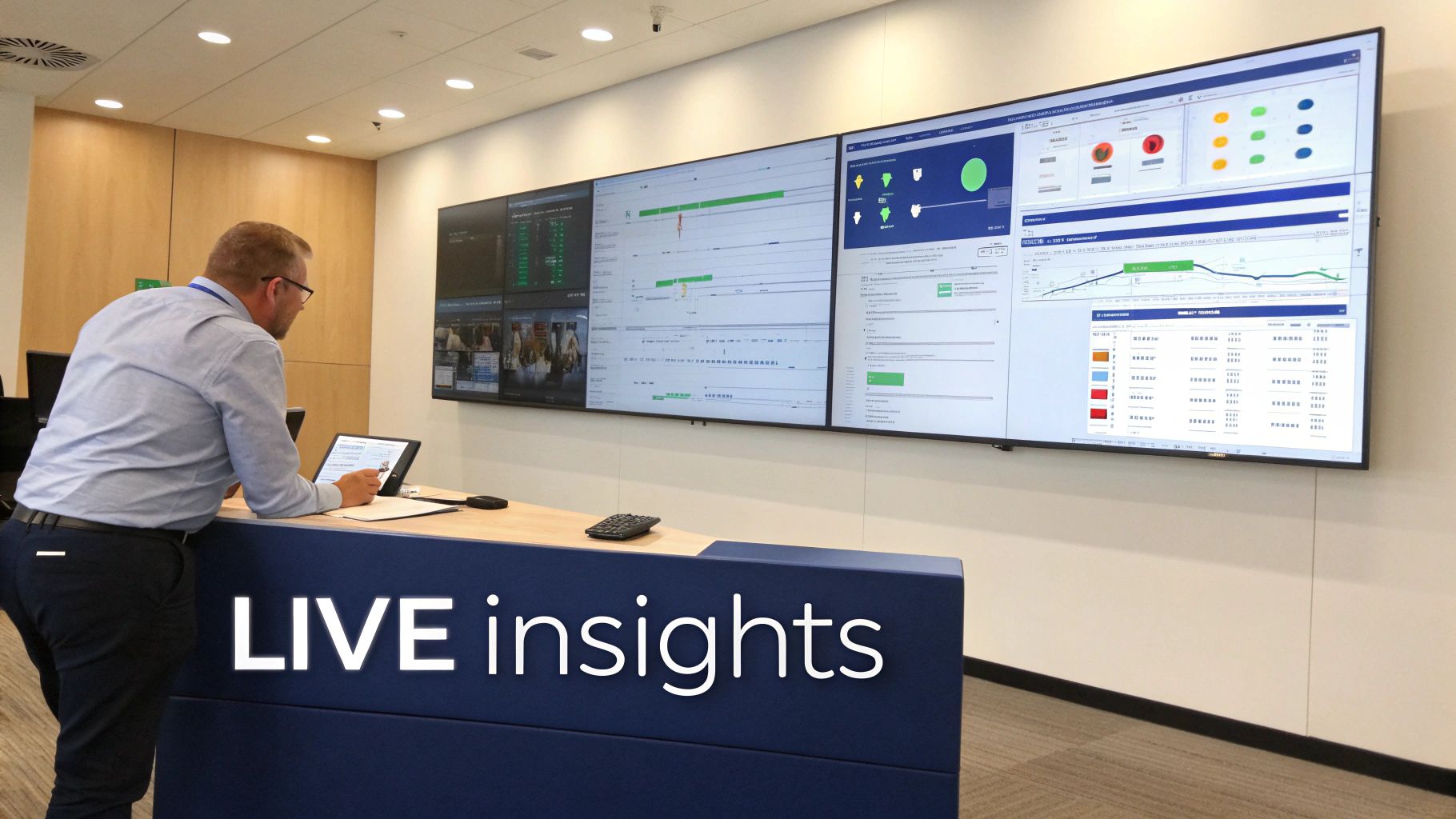
This data-driven approach is a cornerstone of modern call handling best practices, used by enterprise leaders like Amazon and Genesys to maintain service levels. For small and mid-sized businesses, this visibility is equally critical. It allows you to manage resources efficiently, ensuring you have the right number of agents available during peak hours and can provide targeted coaching based on concrete data rather than guesswork.
How to Implement Real-Time Monitoring and Analytics
Leveraging real-time data requires both the right tools and a structured process for reviewing and acting on the insights they provide. The objective is to create a continuous feedback loop that drives operational improvement.
- Utilize Real-Time Dashboards: Actively monitor key metrics using SnapDial’s real-time statistics. Keep an eye on live agent statuses, current queue lengths, and longest wait times to spot and resolve bottlenecks as they happen.
- Establish Performance Benchmarks: You can't improve what you don't measure. Set clear, realistic KPIs for metrics like Average Handle Time, First-Call Resolution, and abandonment rate. Use these benchmarks to track team and individual progress.
- Schedule Regular Data Reviews: Use SnapDial's detailed reporting portal to schedule regular meetings with your team. Review performance trends, celebrate wins, and collaboratively identify areas for training and process improvement.
- Correlate Data with Quality: Don't just look at numbers. Use call logs and recordings to understand the context behind the metrics. A low handle time is great, but not if it comes at the cost of poor customer service. This analysis ensures you maintain a high quality of service.
8. Comprehensive Agent Training and Knowledge Management
Effective call handling is built on the foundation of knowledgeable and confident agents. Comprehensive training and robust knowledge management are essential practices that equip your team to handle customer inquiries accurately and efficiently. This approach goes beyond a simple onboarding session; it involves a continuous cycle of learning, coaching, and providing easy access to information, which directly impacts customer satisfaction and first-call resolution rates.
This strategy is one of the most vital call handling best practices because it transforms agents from script-readers into empowered problem-solvers. For small and mid-sized businesses, a well-trained team can differentiate your brand through superior service. Companies like Zappos and Ritz-Carlton have built legendary reputations by investing heavily in training programs that empower their employees with deep product knowledge and the authority to deliver exceptional customer experiences.
How to Implement Comprehensive Training and Knowledge Management
A successful training program combines structured onboarding, continuous coaching, and accessible resources. The goal is to ensure every agent has the information they need at their fingertips, exactly when they need it.
- Develop a Structured Onboarding Program: Create a detailed curriculum for new hires covering company policies, product specifics, and system usage. Use call recordings from SnapDial to provide real-world examples of both excellent and challenging customer interactions.
- Leverage Call Recordings for Coaching: Regularly review call recordings to identify common challenges and knowledge gaps. This data provides concrete examples for targeted coaching sessions, helping agents improve specific skills.
- Build and Maintain a Knowledge Base: Create a centralized, searchable repository of FAQs, troubleshooting guides, and process documents. Integrating this directly into an agent's workspace allows them to find answers quickly while live on a call, reducing hold times and escalations.
- Implement Continuous Coaching: Use SnapDial's features for real-time support. For instance, you can use whisper coaching to guide a new agent through a difficult call without the customer knowing. To take this further, you can find out more about how to monitor, coach, and barge calls to provide immediate feedback and support.
9. Multi-Location Centralized Call Management
For businesses with multiple branches, offices, or retail outlets, Multi-Location Centralized Call Management is a strategy that unifies communications under a single, cohesive system. This approach replaces siloed, location-specific phone systems with a cloud-based platform, ensuring every customer receives a consistent, high-quality experience regardless of which location they contact. It allows businesses to manage all call flows, routing rules, and agent activity from one central interface.
This model is a vital call handling best practice for scaling companies because it streamlines operations and enhances brand consistency. Instead of managing disparate systems, you can create a unified front that efficiently distributes call volume across your entire organization. National retail chains, multi-office law firms, and regional healthcare providers use this strategy to present a single, professional image while leveraging their entire staff pool to handle customer inquiries effectively.
How to Implement Centralized Call Management
Implementing a centralized system involves leveraging cloud technology to connect all your locations. The goal is to create a seamless network where calls can be routed intelligently based on agent availability, caller location, or specific needs.
- Deploy a Unified Platform: Implement a cloud-based VoIP system like SnapDial across all your business locations. This provides a single management portal to configure IVRs, call queues, and user settings, eliminating the need for on-site hardware at each branch.
- Establish Location-Based Routing: Configure your system to intelligently route callers to the nearest office or the most appropriate department. You can also set up overflow rules that automatically redirect calls to another location during peak hours or if a specific branch is closed.
- Create Shared Reporting Dashboards: Use a centralized analytics portal to monitor call metrics across all locations. This gives leadership a holistic view of performance, allowing them to identify trends, compare branch efficiency, and make data-driven decisions to balance workloads.
- Standardize Customer-Facing Greetings: Ensure brand consistency by implementing the same IVR menu, on-hold music, and professional greetings across all locations. SnapDial’s self-service portal makes it easy to upload and manage these assets centrally and deploy them instantly.
10. Compliance, Security, and Data Privacy in Call Handling
Prioritizing compliance, security, and data privacy is not just a regulatory hurdle; it's a foundational element of customer trust and risk management. This practice involves handling all customer interactions in accordance with legal standards like GDPR, HIPAA, and CCPA, while proactively protecting sensitive data from unauthorized access. For businesses managing personal health information or financial details, secure and compliant call handling is non-negotiable.
This approach is one of the most critical call handling best practices because it safeguards your customers and your business from legal penalties and reputational damage. In an era of heightened data sensitivity, demonstrating a commitment to privacy can be a powerful differentiator. Healthcare providers adhering to HIPAA and financial institutions complying with PCI-DSS build credibility by ensuring every call protects customer information through secure recording, encrypted storage, and controlled data access.
How to Implement a Secure and Compliant Call Handling Strategy
A robust security and compliance framework requires a combination of technology, policy, and ongoing training. The goal is to embed data protection into every step of your communication workflow, making it a default operational standard rather than an afterthought.
- Secure All Communication Channels: Utilize a system like SnapDial that offers end-to-end encryption for data in transit and at rest. Ensure all call recordings and customer data are stored in a secure cloud infrastructure that meets industry-specific compliance requirements.
- Implement Role-Based Access Controls: Restrict access to sensitive information, such as call recordings and customer records. In SnapDial’s web portal, configure permissions so that agents can only access the data necessary to perform their specific job functions, minimizing exposure.
- Develop Clear Data Policies: Establish and document comprehensive data retention and deletion policies. Define how long call recordings and customer data are stored and create a clear process for handling customer requests for data access or erasure in line with GDPR and CCPA.
- Train Staff and Audit Regularly: Conduct regular training for all employees on compliance requirements, data privacy laws, and secure handling procedures. Use SnapDial's audit trails and access logs to review activity, ensure policy adherence, and maintain a documented record of your compliance efforts.
10-Point Call Handling Best Practices Comparison
| Practice | 🔄 Implementation Complexity | ⚡ Resource Requirements | 📊 Expected Outcomes | ⭐ Key Advantages | 💡 Ideal Use Cases / Tips |
|---|---|---|---|---|---|
| First-Call Resolution (FCR) Focus | Medium–High — requires integration & extensive training | High — knowledge bases, CRM access, backend integration | Fewer repeat calls; higher CSAT; lower overall call volume | Resolves issues on first contact; boosts loyalty | Ideal for support-heavy orgs; tip: use call recordings + unified caller history |
| Intelligent Call Routing & Queue Management | High — advanced routing logic and upkeep | Medium–High — routing engine, skill tagging, IVR integration | Reduced wait times; improved FCR and agent utilization | Skill/language matching; load balancing across sites | Best for multi-skill/multi-language centers; tip: pre-qualify via IVR |
| Comprehensive Call Recording & Quality Assurance | Medium — storage, access controls, QA workflows | High — cloud storage, transcription, QA staff | Better compliance, targeted coaching, dispute resolution | Objective evidence for training and audits | Critical for regulated industries; tip: set QA metrics and consent policies |
| Effective IVR & Auto-Attendant Implementation | Medium — careful flow design and testing | Low–Medium — IVR setup, recordings, periodic updates | Lower agent load (20–40%); 24/7 self-service availability | Scales service; reduces operational costs | Good for SMBs needing 24/7 routing; tip: keep menus ≤4 options and allow operator transfer |
| Proactive Call-Back & Callback Queue Management | Low–Medium — reliable callback orchestration | Medium — callback scheduling, notifications, queue integration | Lower abandonment; improved perceived wait times | Preserves customer time; increases callback contact rates | Valuable during peaks/seasonal spikes; tip: send SMS confirmations and prioritize callbacks |
| Mobile-First Call Handling & Remote Work Integration | Low–Medium — app deployment and security policies | Medium — devices, bandwidth, security measures | Flexible staffing; business continuity; broader talent pool | Enables remote/hybrid work; reduces office costs | Ideal for distributed teams & field staff; tip: ensure broadband and enforce security policies |
| Real-Time Monitoring & Performance Analytics | Medium — dashboarding and data pipelines | Medium–High — analytics tools, data storage, training | Proactive staffing adjustments; faster issue resolution | Live visibility into queues and KPIs for decisions | Crucial for high-volume centers; tip: define benchmarks and automate alerts |
| Comprehensive Agent Training & Knowledge Management | High — curriculum design and continuous updates | High — trainers, content management, integration with systems | Higher FCR; reduced AHT; consistent customer experience | Improves agent confidence and consistency | Essential for onboarding and quality programs; tip: use real calls for training examples |
| Multi-Location Centralized Call Management | Medium–High — networking and centralized policies | Medium — cloud admin portal, shared queues, reliable network | Consistent CX across sites; optimized resource use; overflow handling | Centralized control; simplified administration | Best for multi-branch organizations; tip: use location-based routing and shared dashboards |
| Compliance, Security & Data Privacy in Call Handling | High — regulatory alignment and controls | High — encryption, audits, retention systems, training | Reduced legal risk; higher customer trust; audit readiness | Secure recordings, role-based access, traceability | Mandatory for healthcare/finance/GDPR contexts; tip: enforce RBAC and retention policies |
Unify Your Communications and Implement These Practices Today
The journey to exceptional customer service is paved with countless small, intentional actions, and the ten call handling best practices we've explored form the foundational blueprint for that success. Moving beyond mere theory requires a commitment to transforming your communication strategy from a series of disjointed tasks into a unified, intelligent system. This isn't just about answering the phone faster; it's about engineering a customer experience that is seamless, personalized, and consistently positive at every touchpoint.
From prioritizing First-Call Resolution (FCR) to leveraging intelligent routing, each practice serves a dual purpose. It enhances operational efficiency by reducing handle times and agent burnout, while simultaneously boosting customer satisfaction and loyalty. Think of these practices not as a checklist to be completed, but as interconnected pillars supporting a stronger, more resilient business.
From Individual Tactics to a Unified Strategy
Implementing these best practices in isolation can yield some benefits, but their true power is unlocked when they are integrated into a cohesive strategy.
- Intelligent Routing and IVR: An effective IVR system (Practice #4) is the gatekeeper that makes intelligent call routing (Practice #2) possible. It gathers crucial intent data upfront, ensuring customers are directed to the right agent or department on the first try, which directly supports your FCR goals (Practice #1).
- Recording, Training, and Analytics: Comprehensive call recording (Practice #3) provides the raw material for both agent training (Practice #8) and performance analytics (Practice #7). Without recordings, coaching is subjective and KPIs are abstract. With them, you can pinpoint specific areas for improvement and track progress with empirical data.
- Remote Work and Centralized Management: The rise of hybrid work demands a mobile-first approach (Practice #6). This is only truly effective when managed through a centralized system that provides consistent oversight across multiple locations (Practice #9), ensuring that an agent working from home has the same tools and support as one in the office.
This synergy highlights a critical truth: modern call handling is an ecosystem. Neglecting one area, like proactive callback queues, can create bottlenecks that undermine your efforts in another, like real-time monitoring. The goal is to build a system where each component reinforces the others, creating a virtuous cycle of improvement and customer satisfaction.
Key Takeaway: Mastering call handling best practices is less about perfecting individual skills and more about architecting a unified system where technology and training work in harmony to create consistently excellent customer experiences.
The Technology Lynchpin: Your Communication Platform
Adopting this holistic approach is virtually impossible with outdated, on-premise PBX systems or a patchwork of disconnected software. Fragmented tools lead to data silos, inconsistent workflows, and a frustrating experience for both your agents and your customers. To truly execute on these best practices, you need a technology foundation built for agility, integration, and insight.
A modern, cloud-based business phone system is the engine that powers this entire strategy. It breaks down the barriers between different functions, consolidating IVR, queue management, call recording, analytics, and mobile access into a single, intuitive platform. This centralization is what allows a small business to deploy the sophisticated communication strategies once reserved for massive enterprise call centers. By unifying your communications, you empower your team with the tools they need to turn every call into a brand-building opportunity, ensuring that no matter where your team is or what device they are using, the customer receives the same high standard of care.
Ready to put these call handling best practices into action with a platform designed to make it easy? SnapDial provides an all-in-one cloud phone system that unifies IVR, smart routing, call recording, and real-time analytics to help your team deliver exceptional service. Explore how SnapDial can transform your business communications today.