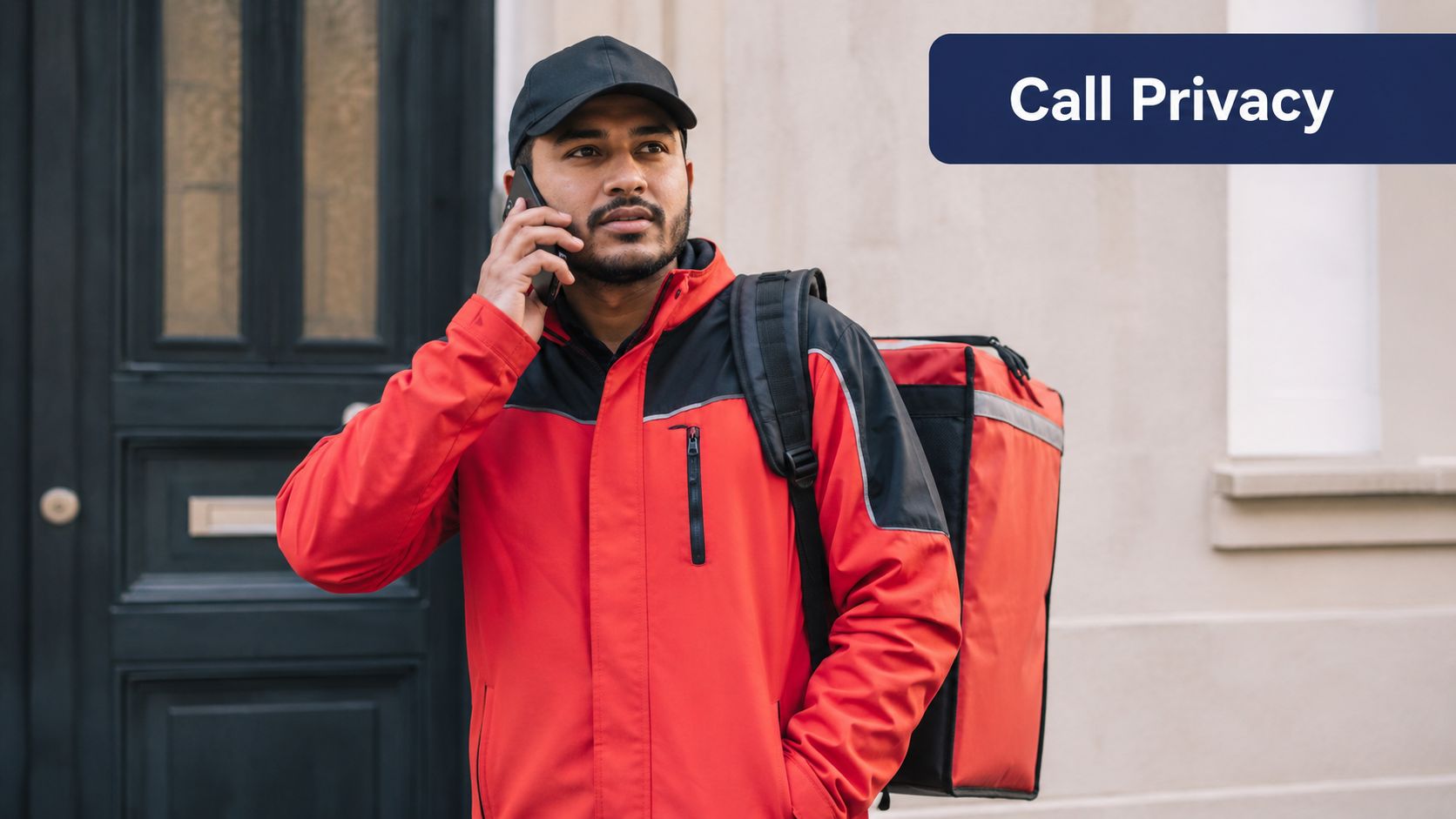
A lot of small businesses are already dealing with phone privacy problems. A field tech calls a customer from a personal mobile. A delivery driver needs to confirm a drop-off. A consultant returns a late client call from home. The conversation gets handled, but the employee's direct number is now sitting in someone else's call log.
That creates two issues at once. First, personal numbers get exposed when they never needed to be. Second, the business loses control of the interaction because the next call or text may bypass the company phone system entirely.
Phone number masking fixes that. Used well, it gives teams a clean way to communicate in real time without handing out private numbers, and it keeps those conversations inside a business-managed calling environment.
The Growing Need for Business Call Privacy
A common pattern shows up in fast-moving businesses. Someone on your team needs to reach a customer quickly, so they use the nearest phone. That might be their personal cell, a direct line that isn't meant for ongoing contact, or a number tied to one employee instead of the company.
That works for the moment. It doesn't work well over time.
A delivery driver who calls to find a gate code may get follow-up calls long after the order is done. A property manager who texts a tenant from a private mobile can end up fielding weekend messages on a number that was never meant to be public. A sales rep who calls prospects from a personal phone may create a messy handoff when an account moves to another rep.
Where the risk shows up first
The immediate problem is privacy, but that's not the only one.
- Employee exposure: Team members can receive unwanted callbacks, texts, or saved-contact follow-ups after the job ends.
- Customer exposure: If communication happens outside the company system, customer contact details can spread further than intended.
- Brand inconsistency: Customers may see a random mobile number instead of a recognizable business identity.
- Operational blind spots: Managers can't easily review call history, routing, or outcomes when business calls happen off-platform.
For businesses that rely on outbound and one-to-one communication, privacy has become part of the customer experience. One industry article says 65% of people are more confident in a company if it uses phone number masking in customer interactions, which is why many teams now treat it as a trust feature, not just a telecom setting (Routee on trust and phone number masking).
Professional boundaries matter now
Customers expect speed, but they also expect sensible handling of personal information. They want to communicate easily without feeling like they're entering someone's private contact list, and your employees want a line between work and personal availability.
Practical rule: If a call should happen for business reasons, it should route through a business-controlled number.
That doesn't mean every employee needs a second device. It means the company needs a better identity layer for calls and texts. Features like managed caller identity, which are often paired with services such as business caller ID tools, help create that boundary so every interaction looks and behaves like it belongs to the business, not the individual employee.
For many SMBs, this is the core reason phone number masking matters. It protects people, keeps communication professional, and stops a quick workaround from becoming a long-term liability.
What Is Phone Number Masking Exactly
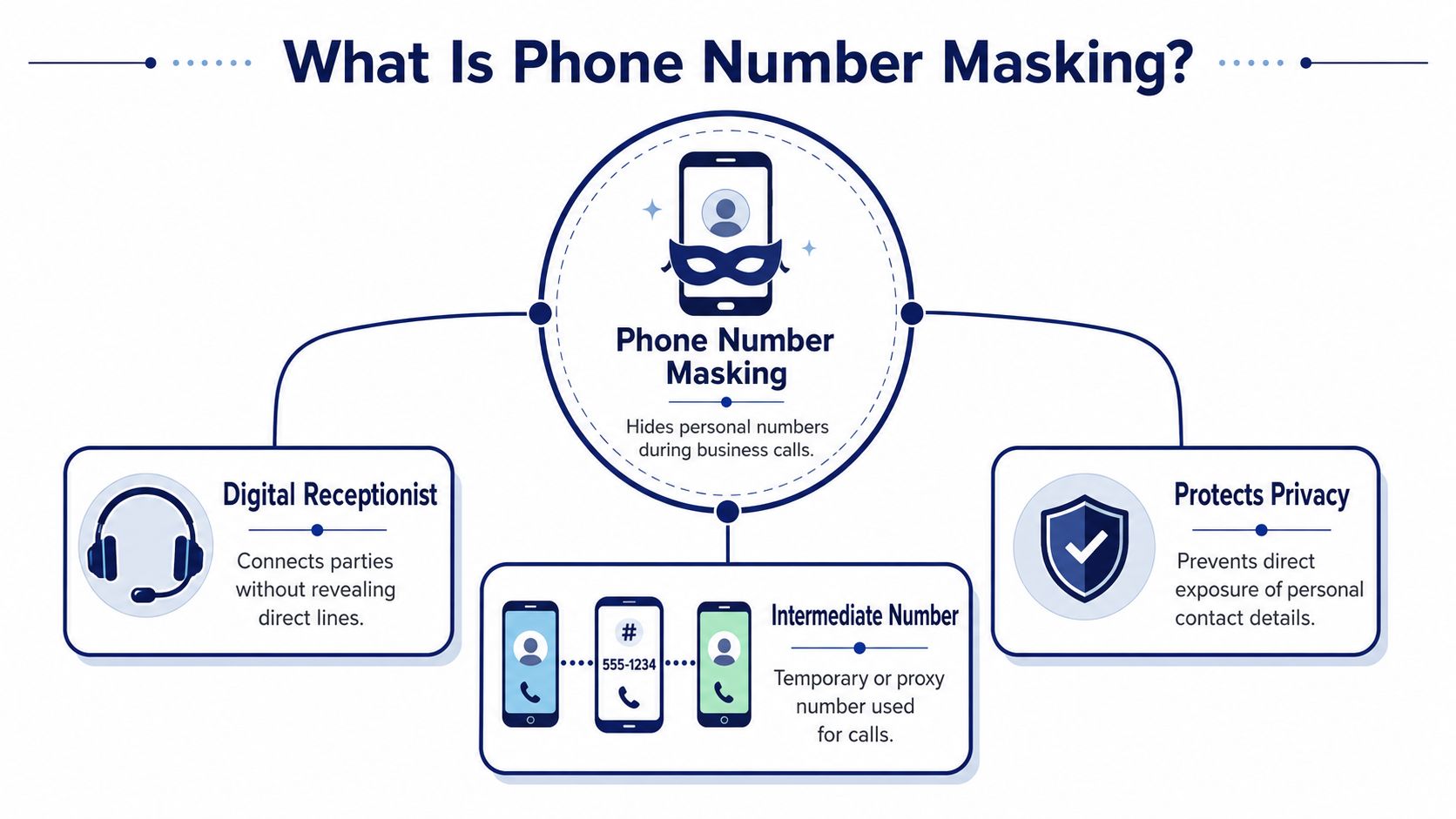
Phone number masking means neither side has to see the other party's real phone number for the conversation to happen. Instead, the system places a temporary or virtual number in the middle and uses that number to connect the call or text.
The simplest way to think about it is a digital receptionist. Your employee wants to contact a customer. The system hands that interaction a neutral number, routes traffic through it, and keeps both real numbers behind the scenes.
The proxy number does the work
The most common implementation in cloud telephony is a proxy-number system. The platform generates a temporary virtual number, routes the call through it, and then releases the number after the interaction ends, as described in TechnologyAdvice's explanation of call masking.
That temporary number may be local, toll-free, or international depending on the use case. What matters operationally is that it acts as a bridge. The customer calls the temporary number. The platform knows where to send that call. The employee calls from within the system, and the platform presents the masked number instead of the employee's real one.
This short video gives a helpful visual overview before getting into the deeper technical details.
How it differs from blocking caller ID
A lot of business owners first think of dialing *67 or using caller ID blocking. That's not the same thing.
Caller ID blocking is blunt. It hides the caller in one direction, often appears as unknown or blocked, and doesn't create a managed channel for return calls, tracking, or controlled routing. It also doesn't solve the business problem of keeping communication inside your phone system.
Phone number masking is better thought of as identity substitution with routing intelligence. The system doesn't just hide a number. It inserts a controlled business-facing number that can still support two-way communication.
A masked call should still be easy to answer, return, log, and manage. If it only hides the number but breaks the workflow, it isn't a business solution.
What businesses usually want from it
In practice, companies adopt masking for a few straightforward reasons:
- Protect personal numbers used by mobile staff, contractors, or remote agents.
- Keep customer conversations inside company systems instead of personal devices and ad hoc call logs.
- Preserve a professional caller identity across teams, shifts, and locations.
- Control the life of the connection so access ends when the job, order, or case ends.
Once you look at it this way, phone number masking stops sounding exotic. It's a controlled middle layer between people who need to talk, without exposing direct lines they shouldn't share.
How Phone Number Masking Works Technically
Under the hood, masking is a routing and identity problem. The system has to connect two real endpoints while presenting a different number to one side, or to both sides. There are a few ways providers do this, and they're not all equal.
For most SMB deployments, the practical choices fall into three buckets: proxy numbers, dynamic caller ID, and SIP-level masking. They overlap, but each one solves a different problem.
Proxy pools and number assignment
The most common model uses a pool of virtual numbers. The platform provisions numbers in advance and assigns one when a transaction starts. That number becomes the temporary contact point for the call or message.
This method works well because it's operationally clean. You can map numbers to orders, agents, departments, markets, or campaigns, then release or recycle them later. It's also easier to audit because the business can see which temporary number was used for which interaction.
Proxy pools are usually the right answer when the business needs:
- Transaction-based communication: deliveries, appointments, service visits, dispatch
- Short-lived contact windows: communication should end after the job or case closes
- Platform control: admins want logging, routing, and reporting in one place
If you're already using hosted calling, understanding how VoIP works in a cloud phone system helps here because masking is really a specialized layer on top of standard VoIP call routing.
Dynamic caller ID and where it fits
Dynamic caller ID is lighter-weight. Instead of assigning a dedicated proxy path for the whole session, the system changes the outbound identity on a per-call basis. That can be enough when the main requirement is “show the right business number” rather than “create a temporary private bridge.”
It's useful for sales teams and distributed staff who need mobility and a consistent outbound business identity. It's less effective when you need strict two-way privacy or short-lived transaction numbers tied to a specific event.
The trade-off is simple. Dynamic caller ID improves presentation. Proxy-number masking improves both presentation and privacy control.
SIP masking and real-time header rewriting
The deeper technical version happens at the signaling layer. In SIP environments, the masking platform intercepts the call setup request and rewrites the caller identity before the call is forwarded. Specifically, the proxy server replaces the original value in the From header with a proxy number, and that rewrite typically happens in milliseconds.
That matters because the original number isn't just hidden on the screen. It's substituted during the signaling process itself.
The broader architecture often uses a dynamic proxy server that manages session state, rewrites caller identity in real time, and ties proxy numbers to specific sessions or tokens. In some implementations, those proxy numbers are short-lived and deactivated or recycled after the transaction window ends. More advanced deployments also layer in signaling and media protection so the original endpoint details aren't leaked during setup or media flow.
The strongest masking setups don't rely on appearance alone. They control the route the call takes and the identity presented at the network level.
Phone number masking methods compared
| Method | How It Works | Best For | Complexity |
|---|---|---|---|
| Proxy numbers | Assigns a temporary or virtual number that routes between both parties | Delivery, dispatch, marketplaces, support handoffs | Moderate |
| Dynamic caller ID | Changes the outbound number shown to the recipient for each call | Mobile sales teams, outbound business calling | Lower |
| SIP masking | Intercepts signaling and rewrites caller identity before the call is forwarded | Businesses that need tighter privacy control in VoIP environments | Higher |
What doesn't work well is mixing consumer-style caller ID tricks with business-grade privacy requirements. If the company needs auditability, repeatable routing, and controlled access, a real masking workflow beats one-off caller ID suppression every time.
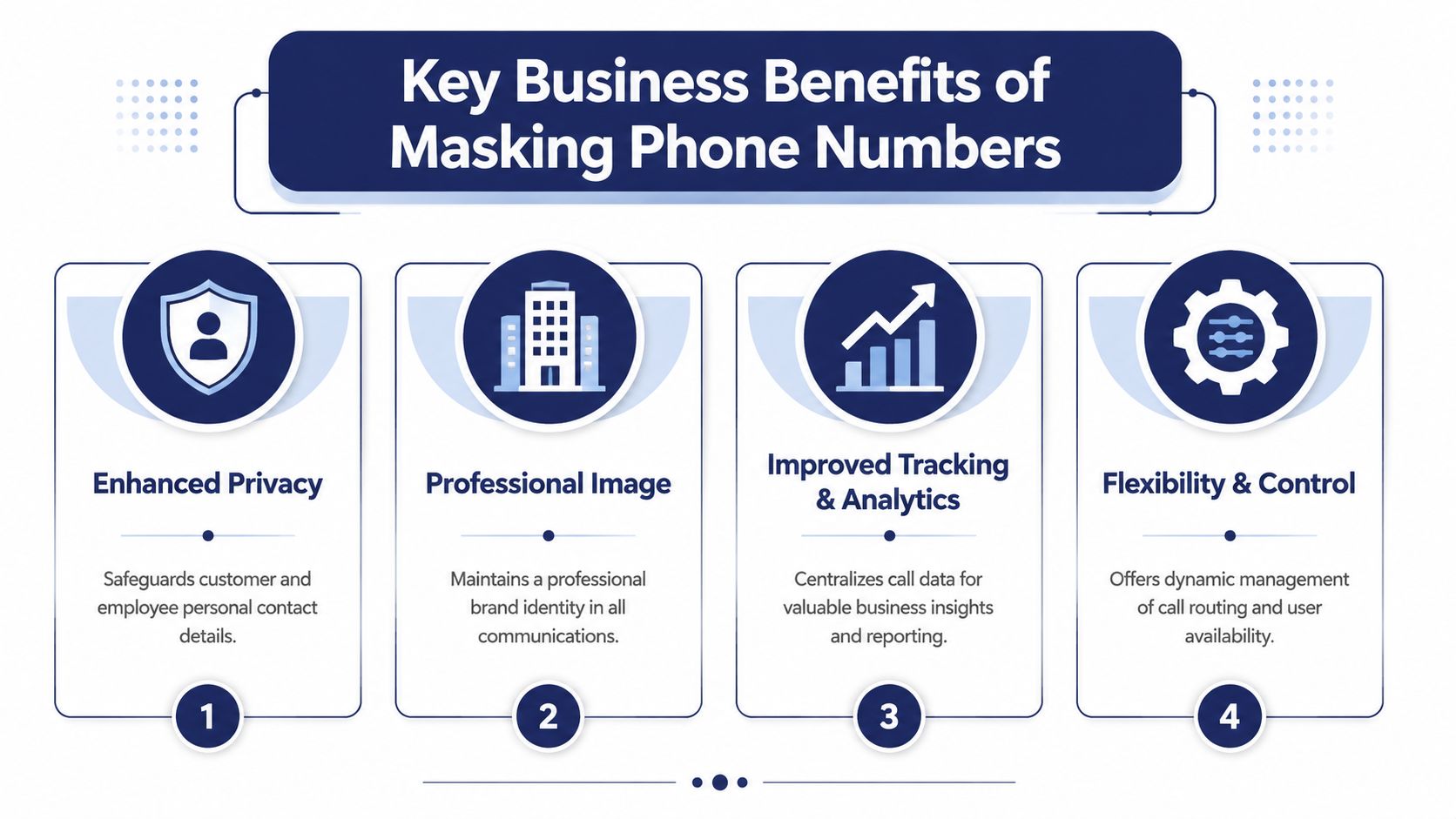
Key Business Benefits of Masking Phone Numbers
Phone number masking earns its keep when it solves a business problem you already have. That problem might be employee privacy, fragmented communications, inconsistent caller identity, or weak audit trails. The feature matters because of what it prevents and what it centralizes.
Privacy and trust travel together
The first benefit is straightforward. Masking keeps personal contact details from being passed around unnecessarily. That protects employees who work from mobile devices, remote locations, or after hours. It also protects customers from having their direct numbers circulate outside the intended interaction.
The second benefit is less technical but just as important. A masked business interaction feels more deliberate. Customers can call, text, and respond without wondering whether they're now dealing with someone's private number.
That's one reason masking tends to improve the overall professionalism of a business phone operation. The communication looks managed, branded, and accountable.
Better control over communication
When teams work from personal devices without a masking layer, the business loses visibility. Calls may happen, but the company can't reliably route them, monitor them, or preserve a clean service history.
Masking fixes that by keeping the interaction tied to a company-managed system. In practical terms, that supports things like:
- Centralized logs: Managers can review call history inside one environment instead of chasing personal-device records.
- Cleaner handoffs: If an employee is unavailable, the business can reroute the masked line or reassign responsibility.
- Campaign separation: Teams can use different virtual identities for service, sales, or local market activity.
- Availability control: The company decides when a communication path stays active and when it ends.
For teams comparing number options across channels, SMS Activate's business phone guide is a useful companion read because it lays out how virtual business numbers fit broader communication workflows.
A business phone number isn't just a dial tone. It's a control point for privacy, routing, reporting, and brand consistency.
Compliance and analytics become easier
Masking can also support privacy obligations when the business handles personal data and wants to limit unnecessary exposure of direct contact information. The exact legal setup still depends on your workflows, your region, and whether calls are recorded or logged, but minimizing number exposure is usually the safer design choice.
There's also a practical reporting upside. When communications route through a central business platform, teams can review patterns such as call volume, call duration, queue activity, and agent handling inside one system. That's hard to do consistently when employees are placing business calls from unmanaged personal lines.
The feature sounds narrow. In daily operations, it touches privacy, service quality, accountability, and brand perception all at once.
Practical Use Cases for SMBs and Call Centers
The easiest way to judge phone number masking is to look at the moments where businesses usually lose control of communication. Those moments tend to happen when speed matters more than process. Someone has to call now, so they use whatever number is available.
That's where masking becomes practical.
Delivery, field service, and appointment workflows
A courier needs to ask which entrance to use. A technician is running late and needs to update the customer. A home services dispatcher wants the assigned worker to coordinate arrival details without exposing a private cell number.
In these cases, masking gives both sides a working line for the job without creating a permanent direct relationship outside the business system. When the service window closes, that contact path can close with it.
This is also where two-way masking matters most. Security analyses show that when both parties are anonymized, the risk of personal number exposure drops by over 95% compared with standard one-way caller ID blocking. One-way hiding isn't enough if the other party's real number still sits in logs, callback lists, or contact history.
Sales teams working from mobile devices
Sales reps often need flexibility. They're traveling, working remotely, or calling from a laptop and mobile app instead of a desk phone. If they use personal numbers, the business creates a messy ownership problem.
A prospect saves the rep's mobile number. The rep changes territories or leaves. The account relationship now lives partly outside the company.
Masked outbound calling solves that. The rep still makes the call from wherever they are, but the customer sees a controlled business identity. That keeps follow-ups, callbacks, and account continuity tied to the company instead of one individual.
If revenue depends on repeat conversations, the business should own the number relationship.
Remote support and call center operations
Support teams run into a different problem. Agents need direct customer contact, but they also need protection from after-hours callbacks and personal harassment. That risk gets worse when agents are remote and using softphones or mobile apps from home.
A masked setup helps in two ways:
- Agent privacy stays intact because personal numbers aren't exposed.
- Supervisors keep visibility because the interaction still runs through the managed calling environment.
For support leaders, that matters as much operationally as it does personally. Agent burnout often gets tied to poor boundaries, and phone identity is one of those boundaries.
Professional services and high-touch client work
Real estate agents, legal teams, consultants, and financial service providers often need direct one-to-one communication that still feels private and structured. They may manage multiple listings, matters, or clients at once, each with different timelines and sensitivity levels.
Masking works well here because it lets the business create clean communication lanes without asking staff to juggle extra devices or reveal private numbers. It also reduces confusion when a case changes hands or a client needs to reach the broader team instead of one specific person.
What fails in these environments is improvised communication. A masked workflow gives the business a repeatable standard instead of relying on everyone to remember which number they should or shouldn't use.
How to Implement Phone Number Masking with SnapDial
Most SMBs don't need to build masking from scratch. They need a clean rollout plan inside a hosted VoIP environment, with clear rules about which numbers get used, who can use them, and when those identities should expire or reroute.
Start with use cases, not settings
Before provisioning anything, decide where masking belongs in your operation. Most businesses start with one of three flows: customer support, field operations, or outbound sales.
Map the answers to a few practical questions:
- Which users should never expose a personal number?
- Which interactions should use temporary numbers rather than permanent department lines?
- Should customers be able to call back the same masked number for a limited time?
- Who needs access to logs, recordings, or routing controls?
Once that's clear, an admin can provision the virtual numbers needed for those workflows. If you're still building your inventory, at this stage a guide on how to buy a business phone number becomes useful because the number strategy affects routing, local presence, and department structure.
Set up the masking workflow inside the phone system
In practice, implementation usually looks like this:
- Provision the right number types: Use local, toll-free, or other business-appropriate virtual numbers based on how customers expect to reach you.
- Assign numbers by function: Separate support, dispatch, campaign, or rep-level use cases instead of reusing one identity for everything.
- Tie routing to users or queues: Make sure replies to a masked number go somewhere useful, whether that's an individual, a ring group, or a support queue.
- Define lifecycle rules: Decide whether a number stays persistent for a customer relationship or rotates after a short transaction window.
Many rollouts succeed or fail at this point. The technology is usually the easy part. The hard part is deciding whether the business wants a reusable masked identity, a temporary proxy for a single event, or a hybrid model.
Use the safer defaults
A few best practices save a lot of cleanup later:
- Prefer two-way masking: If privacy is the goal, anonymize both sides rather than only changing outbound presentation.
- Tell users how to place masked calls: Staff need to know which app, line, or workflow to use so they don't fall back to personal dialing.
- Be transparent with customers: If calls or texts are routed through a managed number, say so in a clear and sensible way.
- Review consent rules: If your broader workflow includes recording or messaging, make sure your policies match the jurisdictions you operate in.
The biggest implementation mistake isn't technical. It's allowing staff to keep one foot in the company system and one foot on their personal phones.
Troubleshoot the common friction points
When masking feels unreliable, the root cause is usually one of these:
- the wrong outbound route is being used
- the user is calling outside the business app or softphone
- the callback path for the masked number hasn't been mapped correctly
- the number lifecycle is too short for the actual customer interaction
Those are process and configuration issues, not signs that masking itself doesn't work. Tighten the workflow, train the users, and test the callback experience before rolling it out broadly.
If your team needs a cloud phone system that can support cleaner routing, stronger privacy, and business-controlled calling from anywhere, SnapDial is worth a look. It gives SMBs and call centers a managed VoIP environment with the administrative control needed to put features like phone number masking into daily use without turning the setup into a telecom project.