
Americans received 4.2 billion robocalls in a single month by April 2026, an average of about 13 calls per person, according to the Congressional Research Service material cited by the FCC. That volume changes the answer to “how to block unwanted calls.” A single blocked number or app toggle can help, but it won't keep pace with spoofed caller IDs, rotating numbers, live telemarketers, and scam calls that look local.
The practical answer is a layered defense. Start with the controls on your phone, add carrier filtering and registration tools, then use reputation analytics and call-routing rules where your business depends on reliable inbound communication. Each layer catches a different failure mode, and each has a trade-off.
Blocking Unwanted Calls on iPhone
An iPhone gives you three useful defenses, but they don't do the same job. One silences unfamiliar callers, one blocks specific numbers, and one identifies suspicious calls through an approved app. Treating those controls as interchangeable is how legitimate calls get missed while nuisance calls continue.
Silence unfamiliar callers first
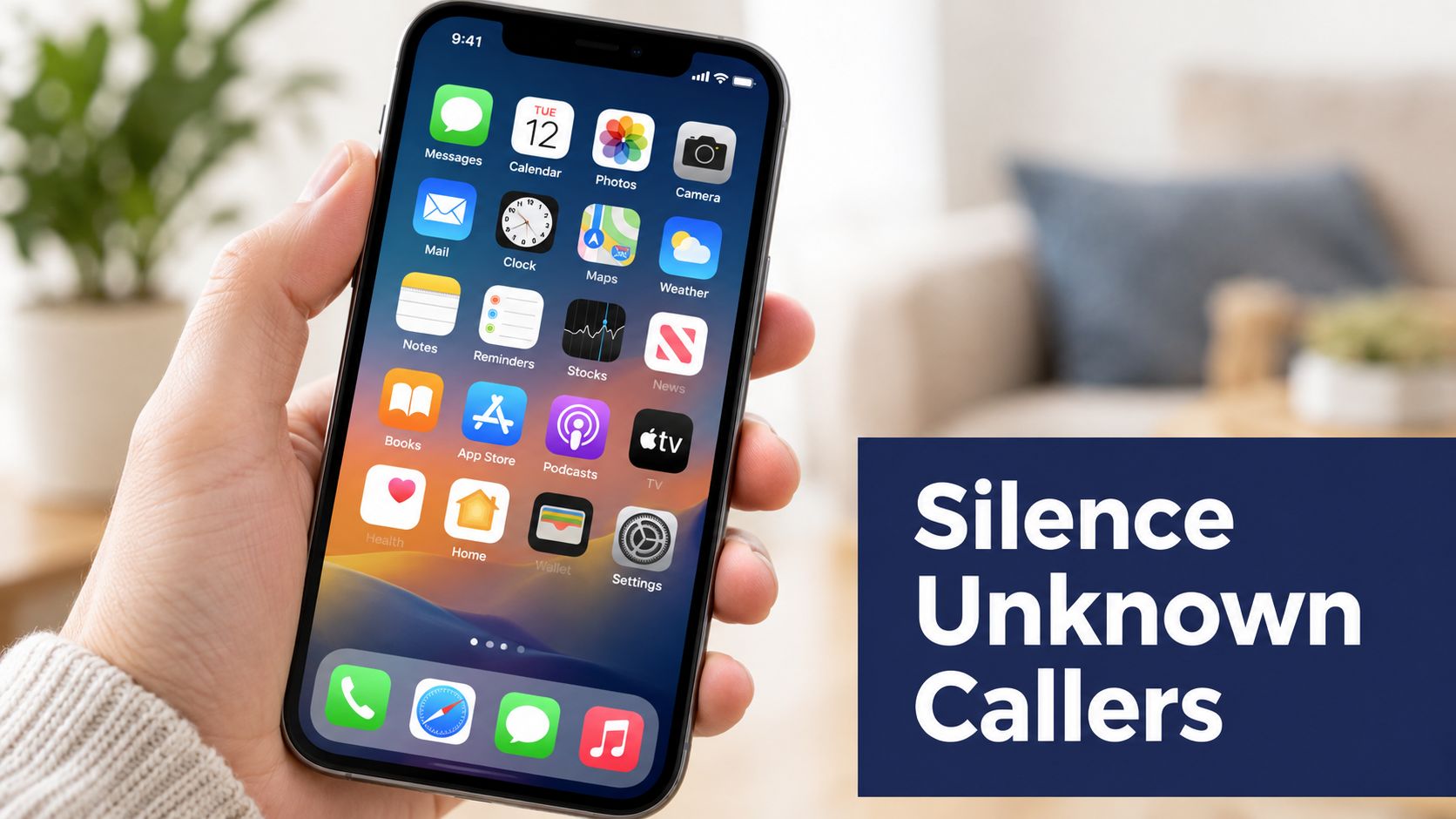
Open Settings > Phone > Silence Unknown Callers and turn the feature on. Calls from numbers outside your contacts, recent outgoing calls, or Siri Suggestions go to voicemail instead of ringing. You'll still see the call in Recents, so this is better understood as silencing and redirecting, not permanently rejecting.
That distinction matters for first-time callers. A doctor's office, delivery driver, new customer, or hiring manager may not be saved in your contacts. If you rely on unknown callers, leave this setting off and use the other layers instead. For people who value uninterrupted work time more than immediate access to unfamiliar callers, it's one of the strongest built-in iPhone controls.
Maintain a deliberate block list
For a known nuisance caller, open Phone > Recents, tap the information icon beside the number, then choose Block This Caller. To review existing entries, go to Settings > Phone > Blocked Contacts.
A block list works well against repeat callers using the same number. It performs poorly against spoofing and rotating caller IDs, because the displayed number may change even when the caller does not. If you manage a large list, use a supported contact or carrier workflow rather than adding every number manually. The iPhone setting itself is not a substitute for network-level reputation analysis.
Add identification only when you need it
Install a reputable caller-identification app, then open Settings > Phone > Call Blocking & Identification and enable the app. This allows the service to label or screen calls, but it won't necessarily silence them. Pairing identification with Do Not Disturb controls can create a quieter schedule, but check which contacts and repeated callers remain allowed.
Practical rule: If an app labels a call but your phone still rings, the app is identifying traffic, not blocking it. Change the app's filtering mode or enable Silence Unknown Callers.
Blocking Unwanted Calls on Android Devices
Android settings vary by manufacturer, but the most consistent path appears in the Phone by Google app. Start there before installing anything else. Built-in filtering has access to the dialer and call history, while a separate app may need additional permissions and can create overlapping labels.
Use Phone by Google's spam controls
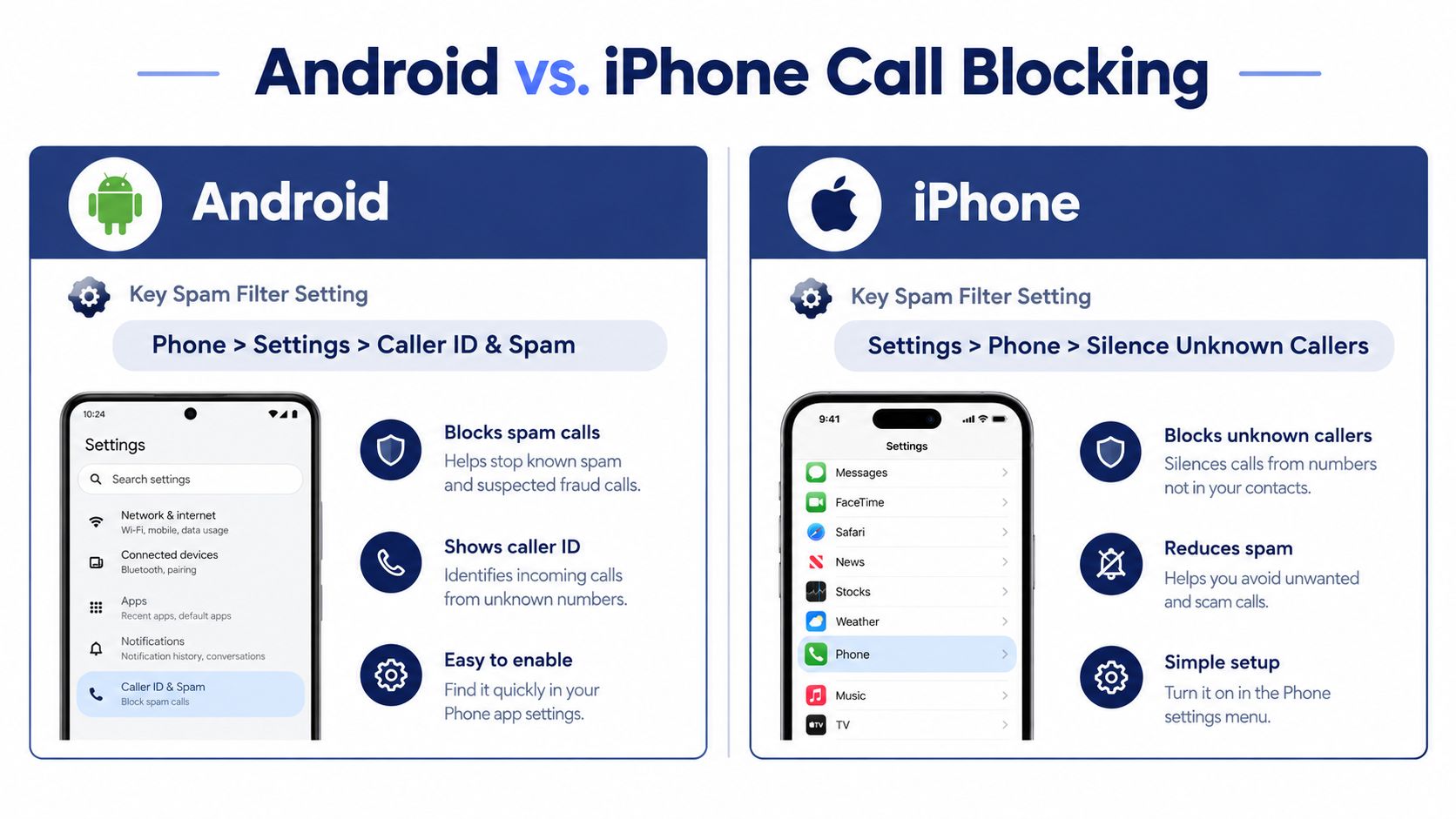
Open Phone > Settings > Caller ID & Spam. Turn on See caller ID & spam, then enable Filter spam calls if you want suspected spam calls blocked rather than merely labeled. Filtered calls may still appear in call history or voicemail, depending on the device and carrier behavior.
The distinction between labeling and blocking is easy to miss. Caller ID helps you make a decision. Filtering changes what reaches you. If your phone is used for customer support, recruiting, medical appointments, or deliveries, review filtered calls regularly so an aggressive rule doesn't hide a legitimate first contact.
Verified Calls can also help identify participating businesses by showing information supplied through the calling system. It improves context, but it isn't a universal shield against spoofing or live-caller spam.
Check the manufacturer's dialer
Samsung users can open the native Phone app and go to Call Settings > Caller ID and spam protection. Samsung's Smart Call can identify suspected spam and, when configured to do so, block or report it. Pixel devices generally use the same Phone > Settings > Caller ID & Spam path as other Phone by Google installations.
Carrier tools can provide another detection layer. Verizon offers Call Filter, AT&T offers ActiveArmor, and T-Mobile offers Scam Shield. Install only the service that matches your carrier, then look for the setting that changes a warning into an actual block. Many defaults label calls first, which is safer for legitimate callers but less effective if your goal is a silent phone.
A short demonstration can help you locate the controls on your device:
Using the Do Not Call Registry and Carrier Tools
The National Do Not Call Registry and carrier filtering solve different problems. The registry is a compliance signal for legitimate telemarketers. Carrier tools inspect call patterns, caller reputation, and network signals. Neither one should be treated as a complete answer to scam calls.
The FTC reported more than 2.6 million Do Not Call complaints in FY 2025, while the registry held over 258 million active registrations at the end of that fiscal year. The same FTC report on the National Do Not Call Registry said unwanted calls were about 48% lower than in FY 2021, when the agency received roughly five million reports. Registration can reduce compliant telemarketing, but scammers, spoofers, and robocall operations don't reliably honor it.
Register at donotcall.gov, then allow time for compliant telemarketers to update their lists. Don't expect registration to stop a scammer who never intended to follow the rules.
Compare the practical gaps
| Option | What It Actually Blocks | Onboarding Time | Known Gaps |
|---|---|---|---|
| National Do Not Call Registry | Calls from compliant telemarketers after their lists update | Short, followed by a waiting period | Scammers, robocalls, spoofed IDs, and businesses with another lawful contact basis |
| Verizon Call Filter | Carrier-identified spam, with blocking depending on selected settings | Usually quick through the carrier app or account | Neighbor spoofing, new numbers, and calls that are labeled but not blocked |
| AT&T ActiveArmor | Spam detection and a user-managed blocked-call list, with advanced controls depending on the plan | Quick after installation or account activation | Classification errors, rotating IDs, and features limited by plan |
| T-Mobile Scam Shield | Scam detection and “Scam Likely” labeling on eligible T-Mobile lines, with blocking controls in the service | Quick on supported lines | A label isn't a rejection, and spoofed or newly observed calls can pass |
| Comcast/Xfinity call screening | Screening and blocking rules available through the phone service | Requires account or device setup | Rule maintenance, unknown callers, and changing spoofed numbers |
Carrier filtering is most useful when you select block mode, not just caller-ID labeling. For a deeper explanation of the network identity layer, review this guide to caller-ID authentication, then test the result from a separate phone instead of assuming an enabled toggle is rejecting calls.
Comparing Top Third-Party Call-Blocking Apps
Third-party apps fill gaps left by device settings, especially when they combine crowdsourced caller identity with live reputation scoring. They also introduce trade-offs around permissions, contact data, subscription features, and whether the app can act as a full dialer or only as an identification extension.
| App | Detection Method | Spoof Handling | Platform | Price | Privacy Note |
|---|---|---|---|---|---|
| Nomorobo | Known robocaller and telemarketing reputation lists, with call-screening features | Can flag recognized patterns, but can't guarantee protection from a new spoofed number | iPhone and Android, with integration varying by operating system | Free and paid options vary by platform and feature | Review access to call history, contacts, and caller-identification permissions |
| Truecaller | Large crowdsourced caller-ID database and spam reports | Can identify suspicious patterns, but neighbor spoofing remains difficult when the displayed number changes | iPhone and Android, with broader dialer features on some Android devices | Free and paid tiers | Check contact-upload and caller-ID permissions before enabling every feature |
| Hiya | Caller reputation, business identity, and spam detection | Useful for recognized spam, less reliable against fresh or rotating spoofed IDs | iPhone and Android, often integrated with device or carrier experiences | Free and paid options vary | Review call, contact, and diagnostic permissions |
| RoboKiller | Reputation filtering plus behavioral and scam-call screening features | Stronger against recognized scam behavior than a manual block list, but no filter catches every first-contact call | iPhone and Android, with feature differences by platform | Generally paid features alongside trial or limited access | Confirm what call data and recordings, if applicable, the selected features process |
Match the app to the failure you're seeing
Choose Truecaller or Hiya when caller identity and crowdsourced labels matter most. Choose Nomorobo when your main problem is recurring robocall or telemarketing traffic. Consider RoboKiller when behavioral screening and scam-call handling matter more than a simple caller-ID label.
No app makes Silence Unknown Callers unnecessary on iPhone, and no app replaces the Phone by Google spam filter on Android. On iPhone, enable the app under Settings > Phone > Call Blocking & Identification, then decide whether unknown callers should still ring. On Android, check whether the app works inside the current dialer or asks you to replace it.
Before granting access, read the permission screen. A caller-ID service may need call logs to classify calls, while a feature that searches contacts can carry a different privacy cost. Install one primary service first, test missed-call handling, then add another only if it closes a specific gap.
Business Phone System Defenses for SMBs and Call Centers
A business can't silence every unknown number. Customers, vendors, applicants, and field technicians may call from numbers your team hasn't saved. The business goal is controlled access, not maximum silence.
Configure the phone system before individual handsets
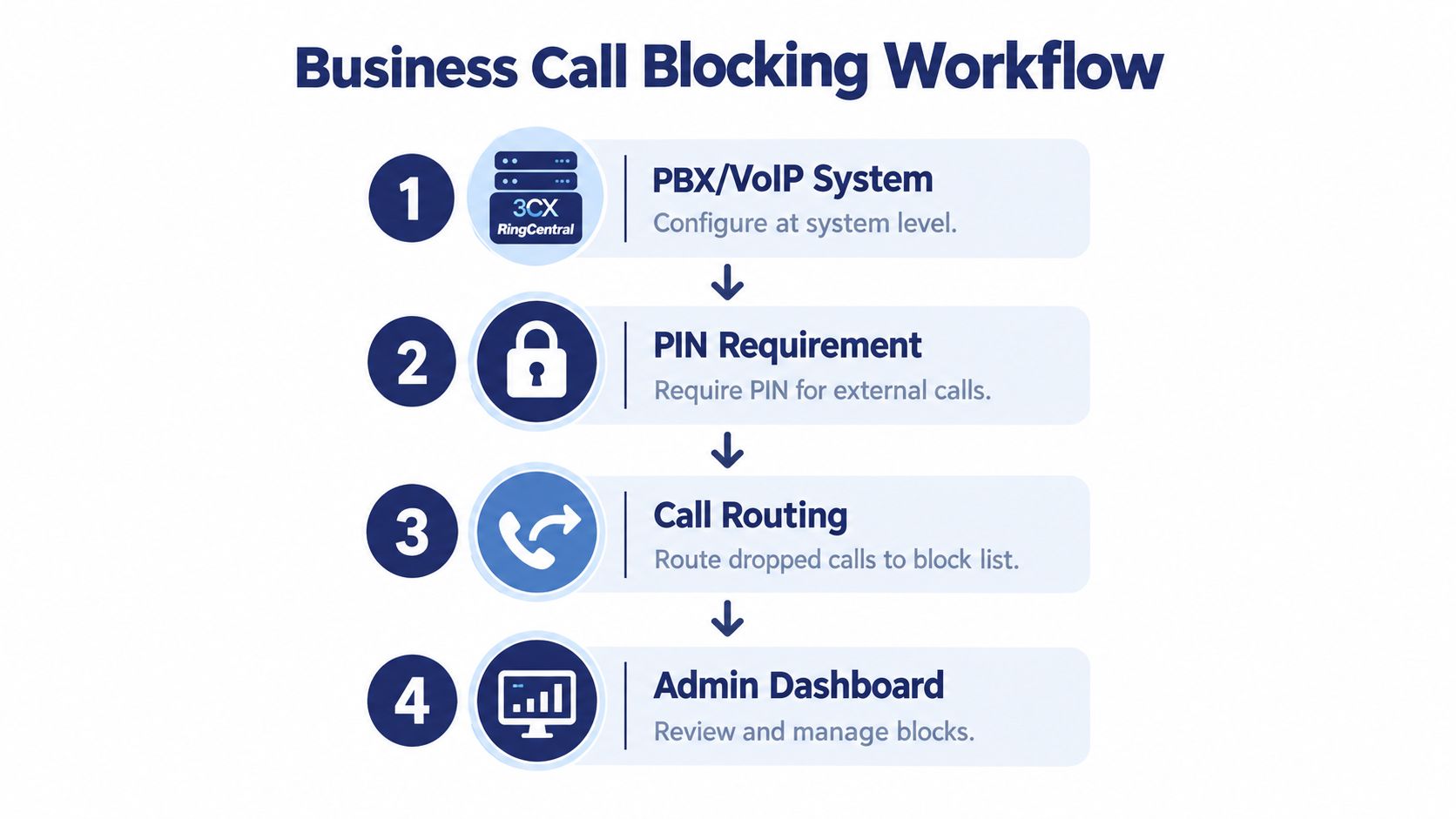
In a hosted PBX or VoIP platform such as 3CX, RingCentral, Zoom Phone, or OpenPhone, start with administrator-level call blocking. Route dropped calls to a maintained block list, require a PIN for external transfers, and set time-of-day rules so after-hours calls follow a deliberate path.
Use a blacklist for confirmed abuse and a whitelist for trusted operational relationships. A whitelist can include vendors, priority customers, locations, and emergency contacts. It should be reviewed by an administrator, not treated as a permanent bypass for every number that once reached an employee.
Put friction before the agent
An IVR can ask for a menu selection, collect an account or order reference, and route callers into the right queue. That small amount of intent-based friction filters some automated traffic without forcing legitimate callers to prove their identity through an unreasonable challenge.
Configure queue behavior with the same care:
- Wait limits: Send abandoned or excessively delayed callers to voicemail or a callback option.
- Callback handling: Preserve the caller's place without making an agent answer an immediate nuisance call.
- After-hours routing: Use voicemail-only or an emergency menu outside operating hours.
- Transfer security: Require a PIN before an external transfer can incur risk or unexpected charges.
A platform comparison can be useful before changing systems. For example, this overview of why 3CX benefits businesses discusses capabilities relevant to organizations evaluating hosted telephony. The exact menu names differ by provider, so document your own call-flow rules and test them from outside numbers.
A manager portal, mobile app, and phone-system interface can give administrators more than one place to maintain blocks. SnapDial includes blacklisting through those management surfaces, alongside IVR, routing, queue callback, wait-time announcements, and reporting features. Teams evaluating caller identity workflows can also review caller ID services as part of the broader inbound-call design.
Advanced Layers Behind Modern Call Blocking
Modern call blocking is a layered system. The handset labels or silences a call, the carrier authenticates or scores it, and the business PBX applies a local policy. Without shared feedback, each layer sees only part of the abuse pattern.
Understand attestation without treating it as a verdict
STIR/SHAKEN caller-ID authentication was adopted by the FCC in 2019, followed by the Robocall Mitigation Database and related enforcement measures in the early 2020s. Attestation generally appears in three forms:
- A attestation: The originating provider knows the customer and has verified the customer's right to use the caller ID.
- B attestation: The provider knows the customer but cannot fully verify the caller ID or the customer's right to use it.
- C attestation: The call entered through a gateway, so the originating identity is less certain.
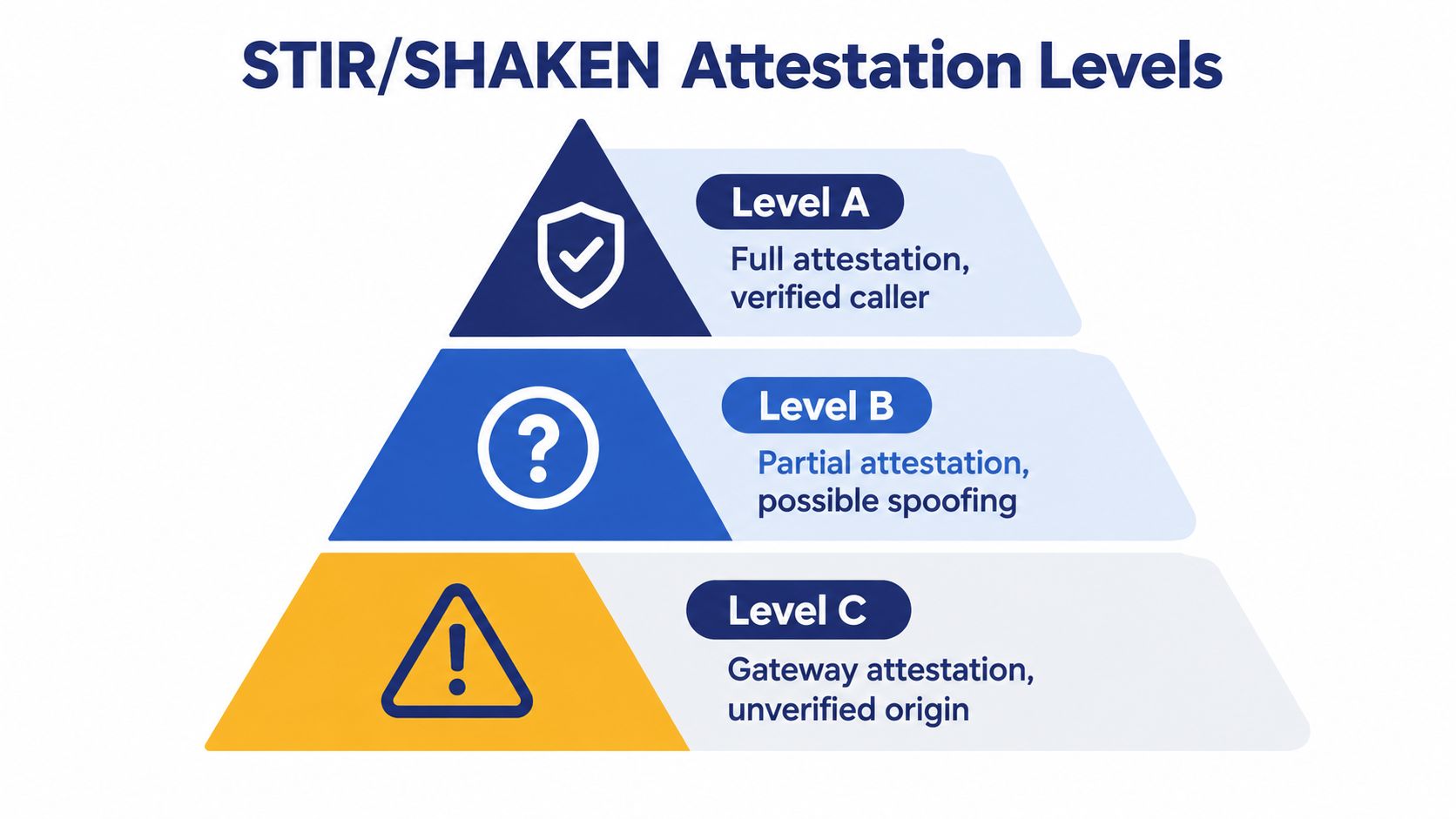
Attestation gives carriers and analytics vendors better evidence, but it does not establish that a caller is trustworthy. A scammer can use a valid number or a compromised account. Use attestation as one input to a decision, alongside reputation, call behavior, and your own block rules.
Turn complaints into operational data
A business analytics dashboard should show more than total inbound calls. Track repeated caller IDs, prefixes, time-of-day clusters, abandoned calls, blocked attempts, and calls agents marked as abusive. Normalize number formats, group related patterns, and send confirmed abuse into PBX rules.
Adaptive blacklists can outperform static manual lists under the right conditions. An NDSS phone-blacklist study reported that automatically learned blacklists could block about 55% or more of future unsolicited calls, while FCC material described one provider reporting edge blocking for 72% of blocked attempts and anonymous call rejection for another 16%. Review the NDSS blacklist study slides for the technical discussion.
Governance determines whether those signals improve operations. Record the time, displayed number, behavior, destination, and agent outcome for serious incidents. File appropriate reports with the FCC or FTC when a pattern warrants escalation. Review blocklists, IVR rules, and attestation reports on a regular quarterly schedule.
Teams handling property or mortgage leads can also assess BatchData for mortgage teams when caller identification must connect with business workflows. Keep that data tied to clear retention, access, and escalation rules so analytics supports blocking without creating a second source of operational confusion.
Putting It All Together and Troubleshooting
You can deploy a sensible first pass without redesigning every phone rule. Use the checklist below, then test it with a known contact, an unfamiliar legitimate caller, and a suspected nuisance number.
Run this checklist today
- Enable device filtering: Turn on Silence Unknown Callers on iPhone, or Phone > Settings > Caller ID & Spam > Filter spam calls on Android. This takes minutes and primarily catches unfamiliar or reputation-flagged calls, but it can screen legitimate first contacts.
- Register your number: Add it to the National Do Not Call Registry. Registration is useful against compliant telemarketing, not against scammers or spoofed caller IDs.
- Activate carrier protection: Install Verizon Call Filter, AT&T ActiveArmor, T-Mobile Scam Shield, or the equivalent service for your carrier. Confirm whether the selected option labels calls or blocks them.
- Add one third-party detector: Pick an app based on your priority, such as crowdsourced identity, robocall lists, or behavioral screening. Review permissions and missed-call handling.
- Apply business controls: Configure PBX blacklists, whitelist exceptions, IVR gates, queue callbacks, and after-hours routing. For business numbers, ask your provider about STIR/SHAKEN attestation and reporting.
- Create a reporting loop: Have employees mark confirmed abuse consistently, then give an administrator responsibility for reviewing those records and updating rules.
Fix the common failures
| Problem | Likely Cause | Corrective Action |
|---|---|---|
| Spoofed numbers still ring | The carrier app is labeling rather than blocking | Switch to block mode, add anonymous-call rejection where appropriate, and keep analytics enabled |
| A legitimate caller gets screened | Silence Unknown Callers or an aggressive spam rule intercepted a first contact | Review Recents and voicemail, save the number to Contacts, and adjust the app's allowlist |
| Agents receive nuisance calls after hours | Queue schedules still send calls to live staff | Use after-hours voicemail-only routing, an emergency menu, or a callback form |
| One region produces repeated spam | A prefix or cluster is appearing in complaint data | Review the pattern, then push a confirmed prefix or number group into the PBX blacklist |
| Blocked callers use new numbers | Manual blocking is targeting individual IDs | Combine reputation analytics, carrier controls, anonymous-call rules, and complaint-driven updates |
Don't measure success only by the number of blocked calls. Check whether legitimate callers still reach the right team, whether voicemail remains usable, and whether agents can explain why a call was screened. Review blocklists, app permissions, carrier features, IVR menus, and analytics at least quarterly because nuisance-call tactics change faster than a static list can keep up.
SnapDial can help SMBs apply this layered approach through hosted VoIP controls such as blacklisting, IVR, call routing, queue callbacks, voicemail transcription, and management reporting. Visit SnapDial to review a business phone system that gives administrators one place to manage inbound call rules and keep legitimate callers reachable.